
Do You Really Need a Root Canal? Signs, Myths, and Facts
The words “root canal” often cause anxiety for many patients—but modern dentistry has made this procedure far more comfortable and predictable than most people expect. In reality, root canal therapy is designed to relieve pain, not cause it.
At OC Dental Center in Santa Ana, one of the most common questions we hear is: “Do I really need a root canal?” The answer depends on the condition of your tooth. In this guide, we’ll explain the signs, address common myths, and help you understand when a root canal is truly necessary.
What Is a Root Canal?
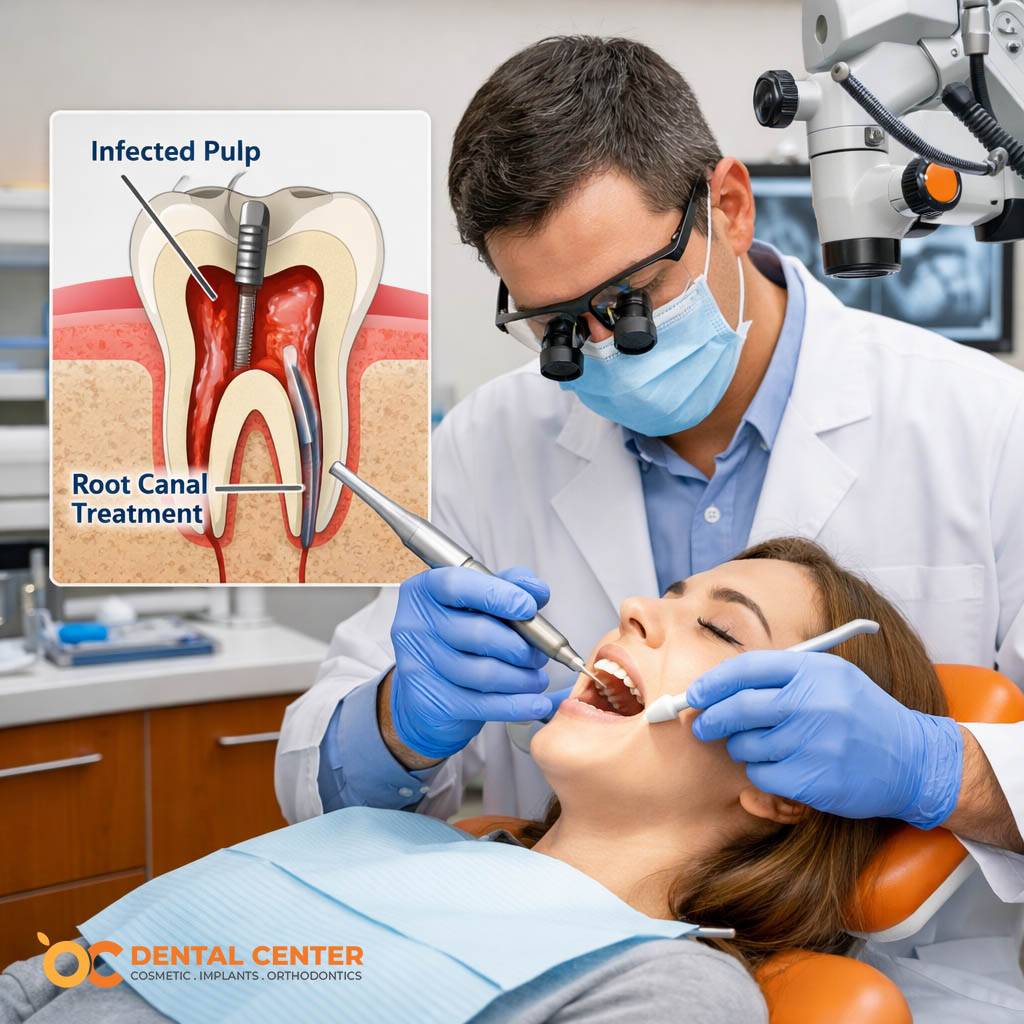
A root canal is a dental procedure used to treat infection or inflammation inside the tooth. The inner portion of the tooth, called the pulp, contains nerves and blood vessels. When this tissue becomes infected or damaged, it can cause significant pain and lead to serious complications if left untreated [1].
During a root canal, the infected pulp is removed, the inside of the tooth is cleaned and disinfected, and the tooth is sealed to prevent further infection. In most cases, a dental crown is placed afterward to restore strength and function.
Common Signs You May Need a Root Canal
Not all tooth pain requires a root canal, but certain symptoms strongly suggest that the inner pulp may be affected.
1. Persistent Tooth Pain
If you’re experiencing ongoing pain that doesn’t go away, especially when chewing or applying pressure, it may indicate nerve involvement.
2. Lingering Sensitivity to Hot or Cold
Sensitivity that lingers long after the stimulus is removed can be a sign that the tooth’s pulp is inflamed or infected.
3. Swollen or Tender Gums
Swelling around a specific tooth may indicate an underlying infection or abscess.
4. Tooth Discoloration
A tooth that becomes dark or grayish may indicate internal damage or dying pulp tissue.
5. Pimple-Like Bump on the Gums
This may be a dental abscess, which can release pus and is a clear sign of infection that requires treatment.
If you’re experiencing any of these symptoms, it’s important to seek evaluation promptly. Early treatment can prevent the infection from spreading and preserve your natural tooth.
What Causes the Need for a Root Canal?
Several dental issues can lead to pulp damage or infection:
- Deep tooth decay: Cavities that reach the inner layers of the tooth
- Cracked or fractured teeth: Allow bacteria to enter the pulp
- Repeated dental procedures: Can weaken the tooth over time
- Trauma or injury: Even without visible damage
These conditions often develop gradually, which is why regular dental exams are essential for early detection.
Root Canal vs. Tooth Extraction
In many cases, a root canal is recommended to save your natural tooth rather than remove it. While extraction may seem like a simpler solution, preserving your natural tooth helps maintain proper chewing function and prevents neighboring teeth from shifting.
Replacing a missing tooth often requires additional procedures such as dental implants or bridges, which can be more costly and time-consuming [2].
Ready for a confident, healthy smile?
Located in Santa Ana California
Common Myths About Root Canals
There are many misconceptions about root canal treatment. Let’s address some of the most common myths:
Myth #1: Root Canals Are Painful
Fact: Modern root canals are performed with local anesthesia and are typically no more uncomfortable than getting a filling. In fact, the procedure relieves the pain caused by infection [3].
Myth #2: It’s Better to Pull the Tooth
Fact: Saving your natural tooth is almost always the best option when possible. Natural teeth function better and help preserve jawbone structure.
Myth #3: Root Canals Cause Illness
Fact: This outdated belief has been debunked by modern research. Root canals are safe and effective for eliminating infection [4].
What to Expect During a Root Canal
Understanding the process can help reduce anxiety:
- Examination and X-rays: To assess the extent of infection
- Local anesthesia: Ensures a comfortable experience
- Cleaning the canal: Removal of infected pulp
- Filling and sealing: Prevents reinfection
- Final restoration: Typically a crown for protection
Most root canals can be completed in one or two visits, depending on the complexity.
How to Prevent the Need for a Root Canal
While not all cases are preventable, good oral hygiene significantly reduces your risk:
- Brush and floss daily
- Schedule regular dental exams and cleanings
- Treat cavities early before they progress
- Wear a night guard if you grind your teeth
Preventive care plays a key role in avoiding advanced dental procedures.
When to See a Dentist in Santa Ana
If you’re experiencing symptoms like persistent pain, swelling, or sensitivity, it’s important to seek professional care. Delaying treatment can lead to more severe infections and potentially tooth loss.
At OC Dental Center, we provide thorough evaluations and will only recommend a root canal when it is truly necessary. Our goal is to preserve your natural teeth and ensure your long-term oral health.
Final Thoughts
A root canal is not something to fear—it’s a highly effective way to relieve pain and save your tooth. Understanding the signs and separating fact from fiction can help you make informed decisions about your dental care.
If you’re unsure whether you need a root canal, scheduling a consultation is the best first step toward clarity and relief.
References
- American Association of Endodontists. “Root Canal Treatment Explained.”
- American Dental Association. “Tooth Replacement Options.”
- Cleveland Clinic. “Root Canal: Procedure, Benefits, and Recovery.”
- National Institute of Dental and Craniofacial Research. “Dental Treatments and Safety.”

AUTHOR BIO: Dr. Pooneh Sabo D.D.S
Dr. Pooneh Sabo is a comprehensive cosmetic and functional dentist and founder of OC Dental Center in Orange County, California. With over two decades of clinical experience, she specializes in oral care ingredient safety, cosmetic dentistry, whitening technologies, and minimally invasive treatment focused on preserving natural tooth structure and long-term oral health.