
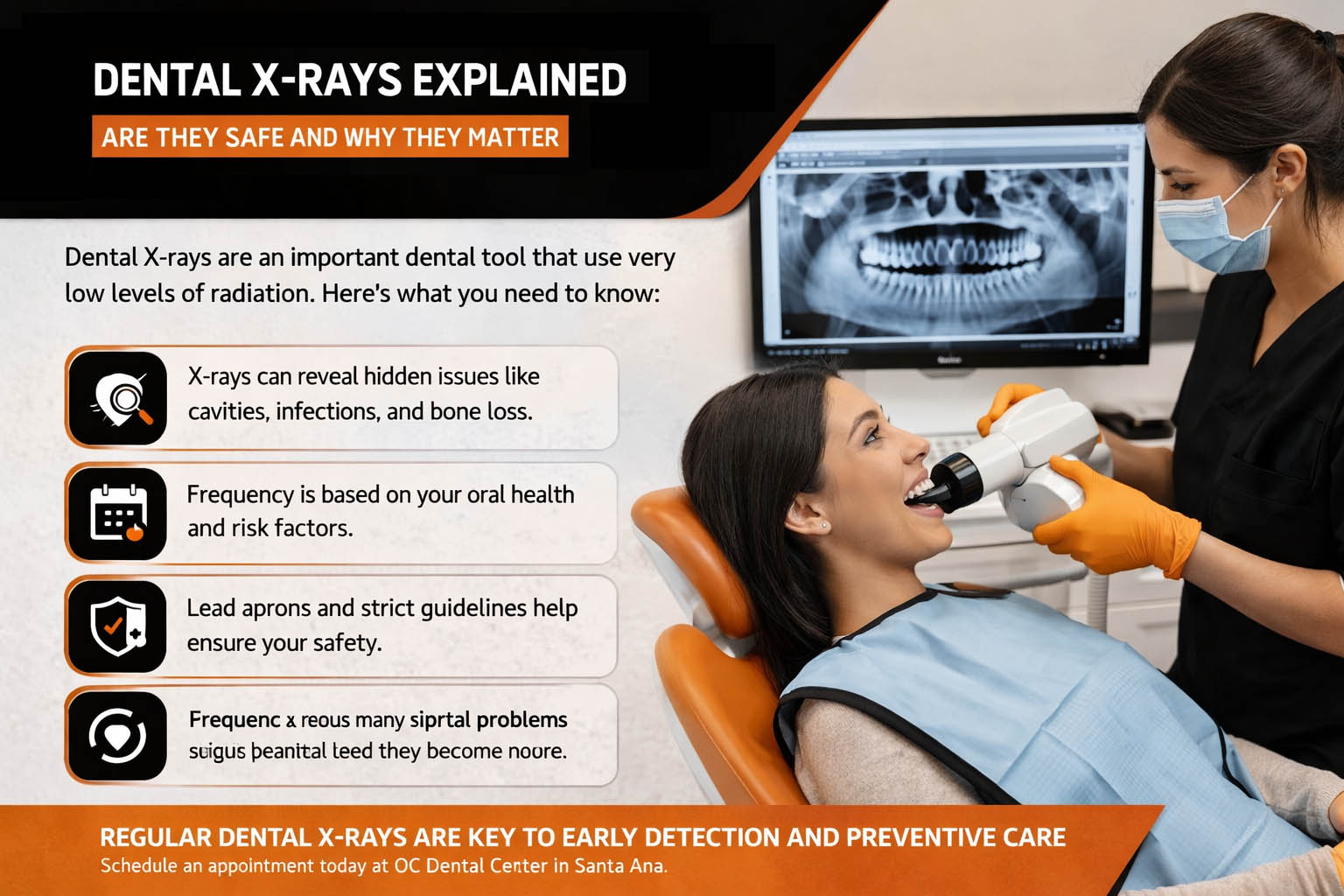
Dental X-Rays Explained: Are They Safe and Why They Matter
Dental X-rays are an essential part of modern dentistry, helping detect problems that aren’t visible during a routine exam. Despite their importance, many patients still have questions about their safety and necessity.
At OC Dental Center in Santa Ana, we believe in educating our patients so they feel confident about their care. In this guide, we’ll explain how dental X-rays work, why they matter, and address common concerns about safety.
What Are Dental X-Rays?
Dental X-rays (also known as radiographs) are images of your teeth, jaw, and surrounding structures. They allow dentists to identify issues that cannot be seen with the naked eye.
These images are commonly used to detect:
- Cavities between teeth
- Bone loss from gum disease
- Infections or abscesses
- Impacted teeth
- Developmental issues
Without X-rays, many dental problems could go unnoticed until they become more advanced and harder to treat.
Types of Dental X-Rays
There are several types of dental X-rays, each serving a specific purpose:
Bitewing X-Rays
Used to detect cavities between teeth and monitor bone levels.
Periapical X-Rays
Focus on the entire tooth, including the root and surrounding bone.
Panoramic X-Rays
Provide a full view of the mouth, including the jaw, sinuses, and wisdom teeth.
3D Cone Beam Imaging
Advanced imaging used for dental implants, complex cases, and detailed diagnostics.
Your dentist will recommend the appropriate type based on your needs.
Are Dental X-Rays Safe?
One of the most common concerns is radiation exposure. The good news is that modern dental X-rays use very low levels of radiation and are considered safe for both adults and children [1].
Digital X-rays, which are commonly used today, reduce radiation exposure by up to 80–90% compared to traditional film X-rays [2].
Additional Safety Measures
- Lead aprons to protect your body
- Thyroid collars when appropriate
- Limiting X-rays to only when necessary
Your dental team follows strict guidelines to ensure your safety at every step.
How Often Do You Need Dental X-Rays?
The frequency of X-rays depends on your individual oral health, age, and risk factors.
- Low-risk patients: Every 1–2 years
- Higher-risk patients: More frequent monitoring may be needed
- New patients: Baseline X-rays are often recommended
Your dentist will determine the appropriate schedule based on your specific needs.
Why Dental X-Rays Are Important
X-rays play a critical role in preventive dentistry. They allow dentists to detect problems early—often before symptoms develop.
- Identify cavities in early stages
- Monitor bone health and gum disease progression
- Detect infections before they cause pain
Early detection often means simpler, less invasive, and more cost-effective treatment.
Ready for a confident, healthy smile?
Located in Santa Ana California
What to Expect During Dental X-Rays
The process of taking dental X-rays is quick, comfortable, and non-invasive.
- You’ll wear a protective lead apron
- A small sensor or film is placed in your mouth
- You’ll bite down gently while the image is taken
- The process is repeated for different angles if needed
Digital images are available almost instantly, allowing your dentist to review and discuss findings with you during the same visit.
Are Dental X-Rays Safe During Pregnancy?
Dental X-rays are generally safe during pregnancy when proper precautions are taken. However, dentists may delay non-urgent X-rays as an extra precaution.
Always inform your dental team if you are pregnant or think you may be.
Common Myths About Dental X-Rays
Myth #1: X-Rays Are Dangerous
Fact: The radiation exposure from dental X-rays is extremely low—often less than what you receive from natural background radiation in a day [3].
Myth #2: You Don’t Need X-Rays If You Don’t Have Pain
Fact: Many dental issues develop without symptoms. X-rays help detect problems early before they become painful.
Myth #3: X-Rays Are Only for Major Problems
Fact: X-rays are a preventive tool used routinely to maintain oral health.
How Dental X-Rays Support Long-Term Oral Health
Dental X-rays are not just about diagnosing current problems—they help track changes over time. This allows your dentist to monitor your oral health and intervene early when needed.
Combined with regular dental exams and cleanings, X-rays are a key component of comprehensive preventive care.
When to See a Dentist in Santa Ana
If it’s been a while since your last dental visit or X-rays, scheduling an appointment is an important step toward maintaining your oral health.
At OC Dental Center, we use modern digital imaging technology to provide accurate diagnoses while prioritizing your safety and comfort.
Final Thoughts
Dental X-rays are a safe, effective, and essential part of modern dentistry. They allow your dentist to see what’s happening beneath the surface and catch problems early—before they become more serious.
If you have questions or concerns about dental X-rays, our team is always happy to provide guidance and ensure you feel confident in your care.
References
- American Dental Association. “Dental Radiographic Examinations: Recommendations.”
- National Institute of Dental and Craniofacial Research. “Dental X-Rays.”
- Cleveland Clinic. “Are Dental X-Rays Safe?”
- NHS. “Dental X-Rays Overview.”

AUTHOR BIO: Dr. Pooneh Sabo D.D.S
Dr. Pooneh Sabo is a comprehensive cosmetic and functional dentist and founder of OC Dental Center in Orange County, California. With over two decades of clinical experience, she specializes in oral care ingredient safety, cosmetic dentistry, whitening technologies, and minimally invasive treatment focused on preserving natural tooth structure and long-term oral health.