
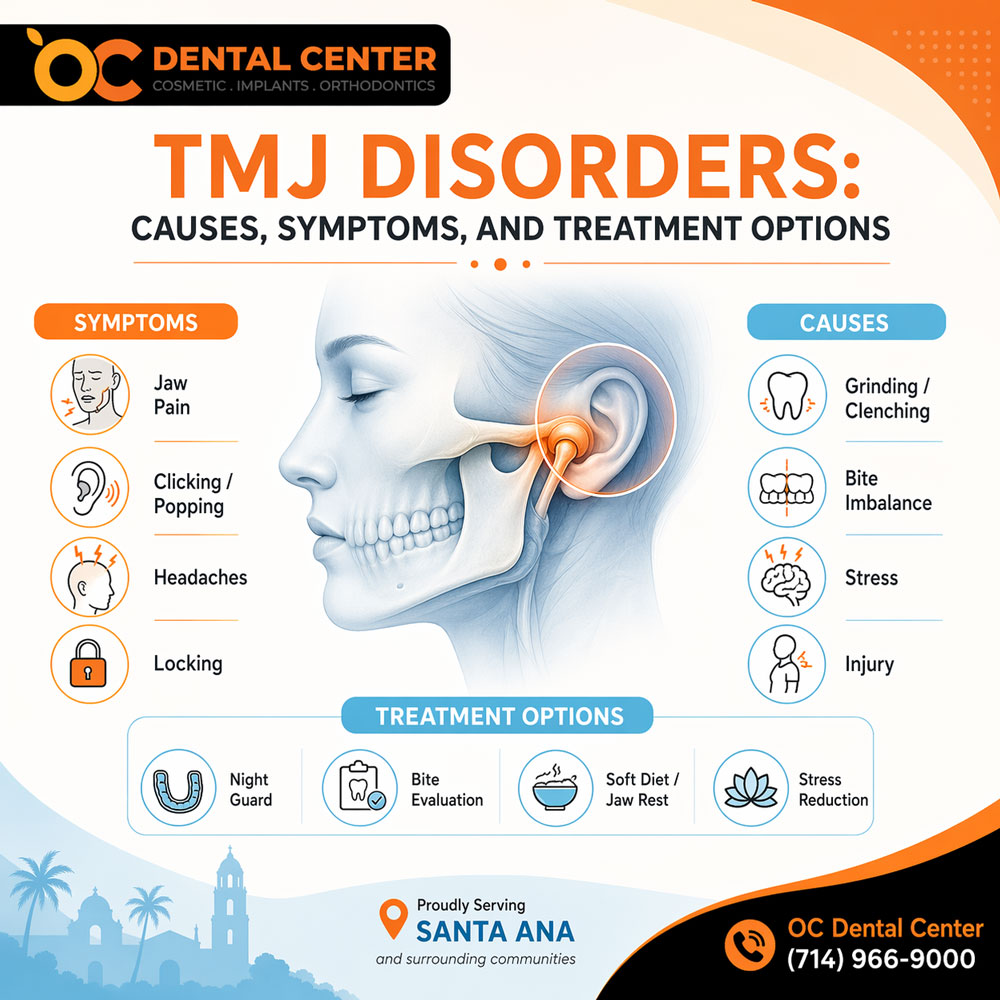
TMJ Disorders: Causes, Symptoms, and Treatment Options
If your jaw clicks, pops, locks, or feels sore when you chew, you may be experiencing symptoms of a TMJ disorder. The temporomandibular joints, often called the TMJ, connect your jawbone to your skull and help you speak, chew, yawn, and move your jaw comfortably.
At OC Dental Center in Santa Ana, we help patients understand jaw discomfort and identify possible dental-related factors such as bite imbalance, teeth grinding, or jaw muscle strain. In this guide, we’ll explain what TMJ disorders are, what symptoms to watch for, and what treatment options may help.
What Is TMJ?
TMJ stands for temporomandibular joint. You have one joint on each side of your face, located just in front of the ears. These joints work with muscles, ligaments, and teeth to guide jaw movement.
When the joint, muscles, or bite are not working together properly, pain or dysfunction may develop. This is often referred to as a temporomandibular disorder, or TMD [1].
Common Symptoms of TMJ Disorders
TMJ symptoms can vary from mild discomfort to more persistent pain. Some patients experience symptoms only when chewing, while others feel discomfort throughout the day.
Jaw Pain or Tenderness
Pain may occur near the jaw joint, along the jawline, or around the ear. Some patients describe it as soreness, tightness, or pressure.
Clicking or Popping Sounds
Jaw clicking or popping can happen when opening or closing the mouth. Clicking without pain is not always a problem, but clicking with discomfort or limited movement should be evaluated.
Difficulty Opening or Closing the Mouth
Some TMJ disorders can make the jaw feel stuck, locked, or difficult to move fully.
Headaches or Facial Pain
Jaw muscle tension can contribute to headaches, temple pain, or facial soreness.
Pain While Chewing
Chewing may become uncomfortable, especially with tough foods or prolonged meals.
What Causes TMJ Disorders?
TMJ disorders often have more than one contributing factor. In many cases, symptoms are related to muscle tension, joint stress, or bite imbalance.
Teeth Grinding and Clenching
Bruxism, or teeth grinding, places heavy pressure on the jaw joints and muscles. Many people grind or clench during sleep without realizing it.
Bite Imbalance
An uneven bite can place extra stress on certain teeth, muscles, and jaw joints.
Jaw Injury or Trauma
A blow to the face, accident, or sudden jaw movement can injure the joint or surrounding tissues.
Arthritis or Joint Inflammation
Inflammatory conditions can affect the jaw joint, just like other joints in the body.
Stress and Muscle Tension
Stress can cause jaw clenching, tight facial muscles, and increased pain sensitivity.
How TMJ Disorders Affect Oral Health
TMJ problems can affect more than the jaw joint. When the bite or jaw muscles are under stress, the teeth may also be affected.
- Tooth wear from clenching or grinding
- Cracked or chipped teeth
- Tooth sensitivity
- Jaw fatigue during chewing
Early evaluation can help prevent long-term dental damage and improve comfort.
Ready for a confident, healthy smile?
Located in Santa Ana California
How Dentists Diagnose TMJ-Related Problems
A dental evaluation can help determine whether your symptoms may be related to your teeth, bite, or jaw muscles. Your dentist may assess:
- Jaw movement and range of motion
- Clicking, popping, or locking
- Tooth wear or signs of grinding
- Bite alignment
- Muscle tenderness
In some cases, dental X-rays or additional imaging may be recommended to better evaluate the jaw joints and surrounding structures.
Treatment Options for TMJ Disorders
Treatment depends on the cause and severity of symptoms. Many TMJ-related issues are managed with conservative, non-invasive approaches first [2].
Custom Night Guards
If clenching or grinding contributes to jaw pain, a custom night guard can help protect the teeth and reduce strain on the jaw joints while sleeping.
Bite Evaluation and Adjustment
If an uneven bite is contributing to symptoms, your dentist may recommend treatment to improve bite balance. This may include selective adjustments or restorative care when needed.
Jaw Rest and Diet Changes
Soft foods, avoiding gum chewing, and limiting wide jaw movements can help reduce irritation during flare-ups.
Stress Reduction
Relaxation techniques, improved sleep habits, and stress management can help reduce clenching and muscle tension.
Referral When Needed
Some complex TMJ disorders may require collaboration with a specialist, physical therapist, or physician depending on the cause.
At-Home Tips for TMJ Discomfort
While professional evaluation is important, some home-care steps may help reduce discomfort:
- Apply warm compresses to tight jaw muscles
- Avoid hard or chewy foods during flare-ups
- Do not chew ice, pens, or fingernails
- Keep teeth slightly apart when resting
- Practice gentle jaw relaxation exercises if recommended
When Should You See a Dentist?
You should schedule a dental evaluation if jaw pain persists, worsens, or affects your ability to chew, speak, or open your mouth comfortably.
Warning signs include:
- Jaw locking
- Pain lasting more than a few days
- Headaches with jaw soreness
- Worn, chipped, or cracked teeth
- Difficulty eating normally
TMJ, Bruxism, and Tooth Damage
TMJ discomfort and bruxism often overlap. Teeth grinding can contribute to jaw pain, while jaw muscle tension can increase clenching. If you have symptoms of both, your dentist may recommend a custom night guard and a bite evaluation.
This topic connects closely with related concerns like cracked teeth, enamel wear, and tooth sensitivity.
When to See a Dentist in Santa Ana
If you are experiencing jaw pain, clicking, headaches, or signs of teeth grinding, scheduling a consultation can help identify the cause and prevent further damage.
At OC Dental Center, we evaluate your bite, jaw function, and tooth wear to recommend a personalized treatment plan for your comfort and long-term oral health.
Final Thoughts
TMJ disorders can be frustrating, but many cases improve with early evaluation and conservative care. Understanding the signs and causes can help you take the right steps before symptoms become more severe.
If jaw pain or clicking is affecting your daily life in Santa Ana, our dental team is here to help you find the most appropriate treatment options.
References
- National Institute of Dental and Craniofacial Research. “TMD (Temporomandibular Disorders).”
- Cleveland Clinic. “TMJ Disorders: Symptoms, Causes, and Treatment.”
- American Dental Association. “Jaw Pain and Temporomandibular Disorders.”
- NHS. “Temporomandibular Disorder (TMD).”
AUTHOR BIO: Dr. Pooneh Sabo D.D.S
Dr. Pooneh Sabo is a comprehensive cosmetic and functional dentist and founder of OC Dental Center in Orange County, California. With over two decades of clinical experience, she specializes in oral care ingredient safety, cosmetic dentistry, whitening technologies, and minimally invasive treatment focused on preserving natural tooth structure and long-term oral health.