
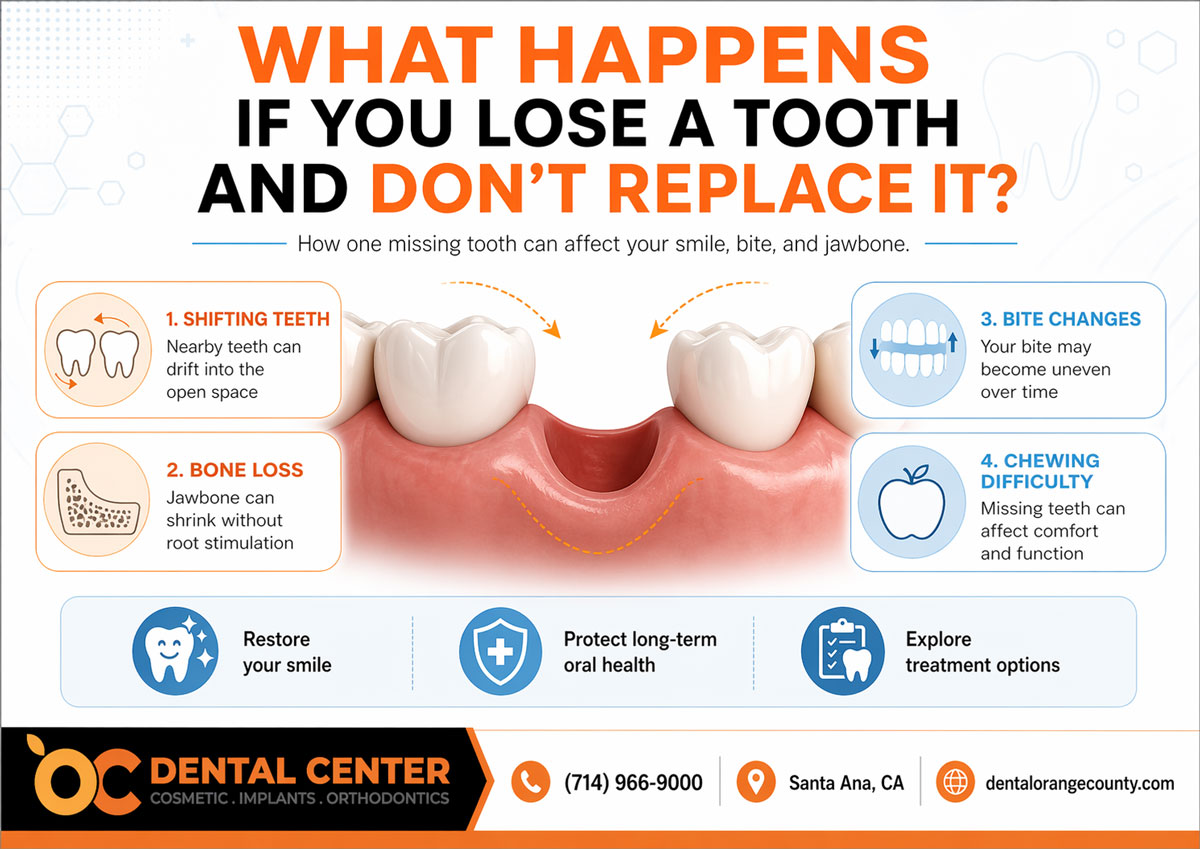
What Happens If You Lose a Tooth and Don’t Replace It?
Losing a tooth may seem like a problem you can put off—especially if the missing tooth is toward the back of the mouth or does not affect your smile. But even one missing tooth can lead to changes in your bite, jawbone, and overall oral health over time.
At OC Dental Center in Santa Ana, we help patients understand the long-term effects of tooth loss and the importance of timely tooth replacement. In this guide, we’ll explain what can happen if a missing tooth is not replaced and what treatment options may help restore your smile.
Why Replacing a Missing Tooth Matters
Your teeth work together as a system. When one tooth is missing, the surrounding teeth, gums, bone, and bite all adapt to the empty space. These changes may not be noticeable right away, but they can become more difficult to correct as time passes [1].
Replacing a missing tooth helps restore chewing function, maintain alignment, and reduce the risk of additional dental problems.
1. Nearby Teeth Can Shift
One of the most common consequences of an untreated missing tooth is shifting. Teeth naturally tend to move toward open spaces. When a gap remains, the neighboring teeth may gradually tilt or drift out of position.
This can lead to:
- Crowding or spacing changes
- Food trapping between teeth
- Difficulty brushing and flossing
- Higher risk of cavities and gum problems
Even small shifts can affect your bite and make future treatment more complex.
2. Opposing Teeth May Over-Erupt
When a tooth is missing, the tooth directly above or below it may begin to move into the empty space. This is called over-eruption.
Over-eruption can cause:
- Bite imbalance
- Tooth sensitivity
- Higher risk of wear or fracture
- Difficulty placing a future replacement
Once this movement occurs, additional treatment may be needed before the missing tooth can be replaced.
3. Jawbone Loss Can Occur
Natural tooth roots stimulate the jawbone when you chew. When a tooth is lost, that area of bone no longer receives the same stimulation. Over time, the bone may begin to shrink or resorb [2].
This can affect:
- Facial support
- Future dental implant placement
- Gum and bone shape around the missing tooth
Dental implants are unique because they replace the tooth root and help stimulate the jawbone.
4. Chewing Can Become More Difficult
Even one missing tooth can change how you chew. You may begin favoring one side of the mouth, which can place uneven pressure on the remaining teeth.
Over time, this can contribute to:
- Excessive tooth wear
- Jaw discomfort
- Digestive discomfort from poorly chewed food
Restoring a missing tooth helps distribute chewing forces more evenly.
Ready for a confident, healthy smile?
Located in Santa Ana California
5. Your Bite May Change
Your bite depends on proper contact between upper and lower teeth. When a tooth is missing, the balance of your bite can shift, potentially leading to uneven pressure and discomfort.
Common signs of bite changes include:
- Jaw soreness
- Headaches
- Tooth wear
- Pain when chewing
A dental exam can help determine whether a missing tooth is affecting your bite.
6. Speech and Confidence May Be Affected
Depending on the location of the missing tooth, speech may be affected. Front teeth, in particular, play an important role in pronunciation.
Missing teeth can also impact confidence, especially when smiling, laughing, or speaking in social settings.
7. Future Treatment May Become More Complicated
The longer a missing tooth goes untreated, the more surrounding structures may change. Shifting teeth, bone loss, and bite changes can make replacement more complex later.
In some cases, patients may need orthodontic treatment, bone grafting, or additional restorative care before replacing the missing tooth.
Tooth Replacement Options
There are several ways to replace a missing tooth, and the best option depends on your oral health, budget, and goals.
Dental Implants
Dental implants replace both the tooth root and visible crown. They are often recommended for long-term tooth replacement and jawbone support.
Dental Bridges
A dental bridge fills the gap by using nearby teeth for support. Bridges can be a good option when adjacent teeth already need crowns.
Partial Dentures
A removable partial denture can replace one or more missing teeth and may be recommended for certain cases.
How Soon Should You Replace a Missing Tooth?
In general, it is best to discuss replacement options as soon as possible after losing a tooth. Early planning helps preserve space, protect your bite, and reduce the likelihood of additional procedures later [3].
Even if the tooth was lost months or years ago, a consultation can help determine what options are still available.
When to See a Dentist in Santa Ana
If you are missing a tooth or have been told a tooth may need extraction, scheduling a dental consultation is an important next step.
At OC Dental Center, we evaluate your teeth, gums, jawbone, and bite to recommend a personalized tooth replacement plan. Our goal is to restore function, protect your long-term oral health, and help you feel confident in your smile.
Final Thoughts
A missing tooth may seem like a small issue at first, but over time it can affect alignment, chewing, bone health, and confidence. Replacing a missing tooth early can help prevent these changes and support a healthier smile.
If you have a missing tooth in Santa Ana, our team is here to help you explore your options and choose the treatment that best fits your needs.
References
- American Dental Association. “Missing Teeth and Tooth Replacement Options.”
- National Institute of Dental and Craniofacial Research. “Tooth Loss and Oral Health.”
- Cleveland Clinic. “Dental Implants and Tooth Replacement.”
- NHS. “Dental Bridges, Implants, and Dentures.”
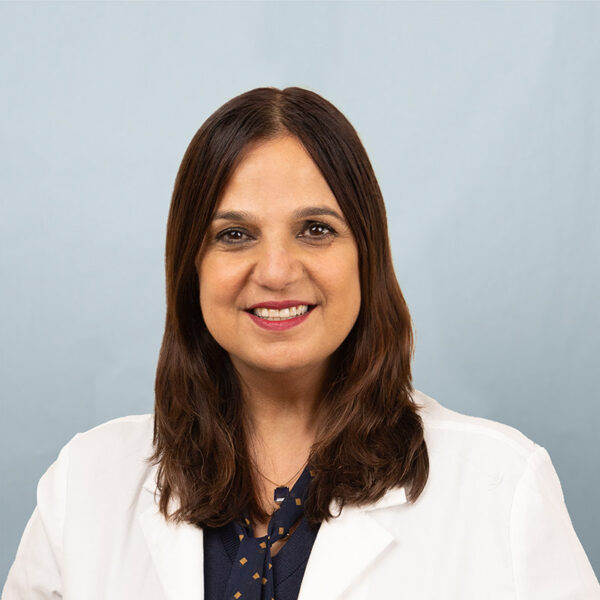
AUTHOR BIO: Dr. Pooneh Sabo D.D.S
Dr. Pooneh Sabo is a comprehensive cosmetic and functional dentist and founder of OC Dental Center in Orange County, California. With over two decades of clinical experience, she specializes in oral care ingredient safety, cosmetic dentistry, whitening technologies, and minimally invasive treatment focused on preserving natural tooth structure and long-term oral health.