
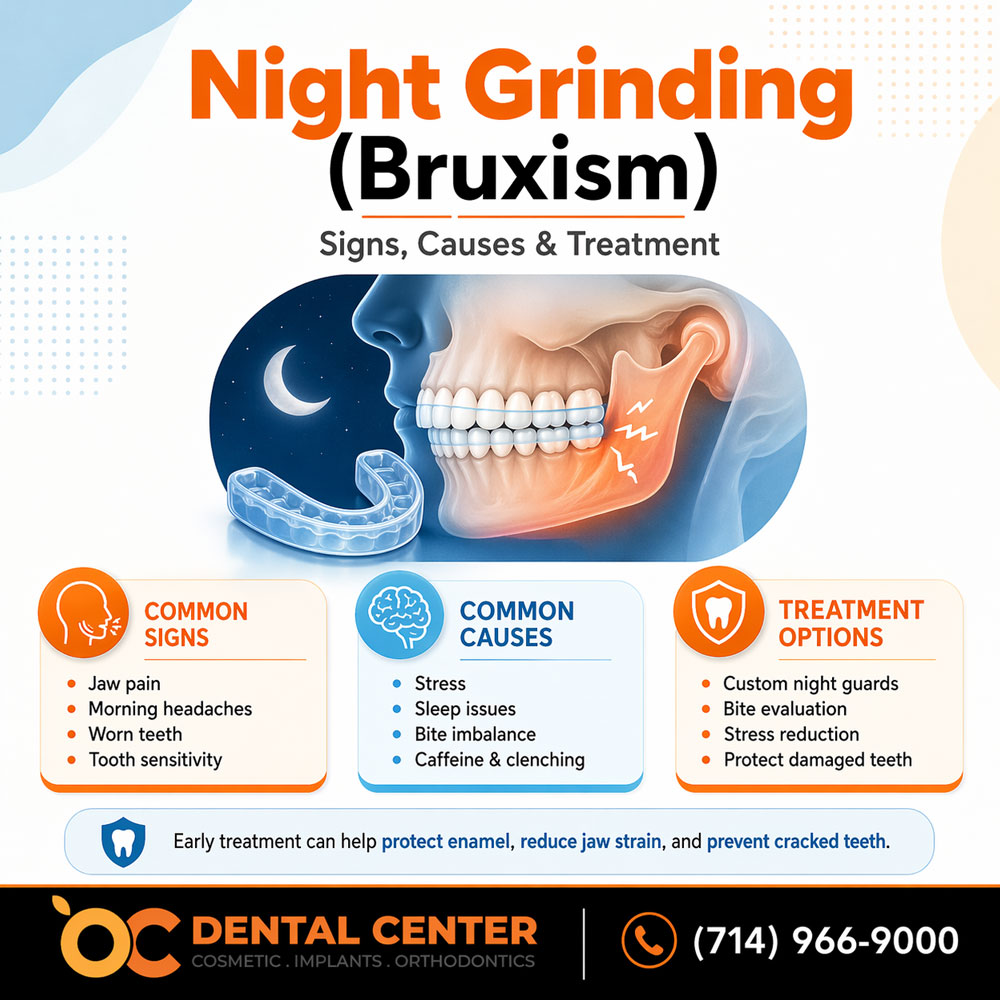
Night Grinding (Bruxism): Signs, Causes, and Treatment
Night grinding, also known as sleep bruxism, is a common condition where you clench or grind your teeth while sleeping. Many patients do not realize they grind their teeth until a dentist notices signs of wear—or until symptoms like jaw pain, tooth sensitivity, or morning headaches begin.
At OC Dental Center in Santa Ana, we help patients identify the signs of bruxism early and protect their teeth from long-term damage. In this guide, we’ll explain what night grinding is, why it happens, and how dentists can help treat it.
What Is Bruxism?
Bruxism is the involuntary grinding, clenching, or gnashing of the teeth. It can happen during the day or at night, but sleep bruxism is often harder to notice because it occurs unconsciously [1].
Over time, repeated grinding can place excessive pressure on the teeth, jaw muscles, and temporomandibular joints (TMJ), leading to discomfort and dental damage.
Common Signs You May Be Grinding Your Teeth at Night
Because night grinding happens during sleep, the signs are not always obvious. Watch for these common symptoms:
1. Worn or Flattened Teeth
One of the most noticeable signs is tooth wear. The chewing surfaces may look flattened, chipped, or uneven.
2. Morning Jaw Pain or Tightness
If you wake up with sore jaw muscles or tightness, clenching during sleep may be the cause.
3. Tooth Sensitivity
Grinding can wear down enamel, exposing more sensitive areas of the teeth and increasing sensitivity to hot, cold, or sweet foods.
4. Headaches or Facial Pain
Muscle tension from clenching can contribute to headaches, especially in the morning.
5. Cracked or Chipped Teeth
Bruxism can increase the risk of cracks, fractures, and broken dental restorations.
6. Sleep Disruption
Some patients are told by a partner that they grind their teeth loudly during sleep.
What Causes Night Grinding?
Bruxism can have multiple contributing factors. In many cases, it is linked to a combination of stress, bite issues, sleep patterns, and lifestyle habits.
Stress and Anxiety
Emotional stress is one of the most common associations with teeth grinding and clenching. Many people clench their jaw during stressful periods without realizing it.
Bite Alignment Issues
An uneven bite or missing teeth can place extra pressure on certain teeth, increasing the risk of grinding-related damage.
Sleep Disorders
Sleep bruxism may be associated with certain sleep disturbances, including snoring or sleep apnea [2].
Caffeine, Alcohol, and Tobacco
These substances may increase muscle activity during sleep and contribute to grinding in some patients.
Why Bruxism Should Not Be Ignored
Night grinding may seem minor at first, but it can cause significant damage over time. Untreated bruxism may lead to:
- Enamel erosion
- Tooth sensitivity
- Cracked or fractured teeth
- Jaw pain or TMJ symptoms
- Damage to crowns, fillings, or veneers
Early treatment can help protect your natural teeth and prevent more extensive dental work later.
Ready for a confident, healthy smile?
Located in Santa Ana California
How Dentists Diagnose Bruxism
A dentist can often identify signs of bruxism during a routine exam. They may look for tooth wear, cracks, gum recession, bite changes, and jaw muscle tenderness.
In some cases, your dentist may also ask about sleep quality, headaches, stress levels, or whether anyone has heard grinding sounds while you sleep.
Treatment Options for Night Grinding
Treatment depends on the severity of grinding and the underlying causes. The goal is to protect your teeth, reduce pressure, and relieve discomfort.
Custom Night Guards
A custom dental night guard is one of the most common treatments for sleep bruxism. It is worn while sleeping to create a protective barrier between the upper and lower teeth.
Unlike over-the-counter guards, custom night guards are designed to fit your mouth more precisely, improving comfort and protection.
Bite Adjustment
If uneven bite pressure is contributing to grinding damage, your dentist may recommend adjustments or restorative treatment to improve balance.
Stress Management
Because stress can contribute to clenching, relaxation techniques, exercise, and improved sleep routines may help reduce symptoms.
Treating Damaged Teeth
If grinding has already caused chips, cracks, or worn enamel, treatments such as bonding, crowns, or enamel-protective care may be recommended.
Can a Night Guard Stop Grinding?
A night guard may not always stop the grinding habit itself, but it helps protect your teeth from the forces of grinding. It can also reduce strain on the jaw muscles and help prevent further damage.
How to Reduce Teeth Grinding at Home
In addition to dental treatment, certain habits may help reduce grinding triggers:
- Limit caffeine and alcohol close to bedtime
- Avoid chewing on pens, ice, or hard objects
- Practice jaw relaxation before sleep
- Maintain a consistent sleep schedule
- Discuss snoring or sleep concerns with a healthcare provider
When to See a Dentist in Santa Ana
If you wake up with jaw pain, notice worn teeth, or experience recurring tooth sensitivity, it’s a good idea to schedule a dental evaluation.
At OC Dental Center, we can check for signs of bruxism, evaluate your bite, and recommend a personalized treatment plan to protect your teeth.
Final Thoughts
Night grinding is common, but it should not be ignored. Over time, bruxism can damage enamel, crack teeth, and contribute to jaw discomfort. The good news is that early diagnosis and a custom night guard can help protect your smile.
If you suspect you grind your teeth at night, our Santa Ana dental team is here to help you find the right solution.
References
- American Dental Association. “Bruxism: Teeth Grinding.”
- Cleveland Clinic. “Bruxism: Causes, Symptoms, and Treatment.”
- National Institute of Dental and Craniofacial Research. “Oral Health Topics.”
- NHS. “Teeth Grinding (Bruxism).”

AUTHOR BIO: Dr. Pooneh Sabo D.D.S
Dr. Pooneh Sabo is a comprehensive cosmetic and functional dentist and founder of OC Dental Center in Orange County, California. With over two decades of clinical experience, she specializes in oral care ingredient safety, cosmetic dentistry, whitening technologies, and minimally invasive treatment focused on preserving natural tooth structure and long-term oral health.