
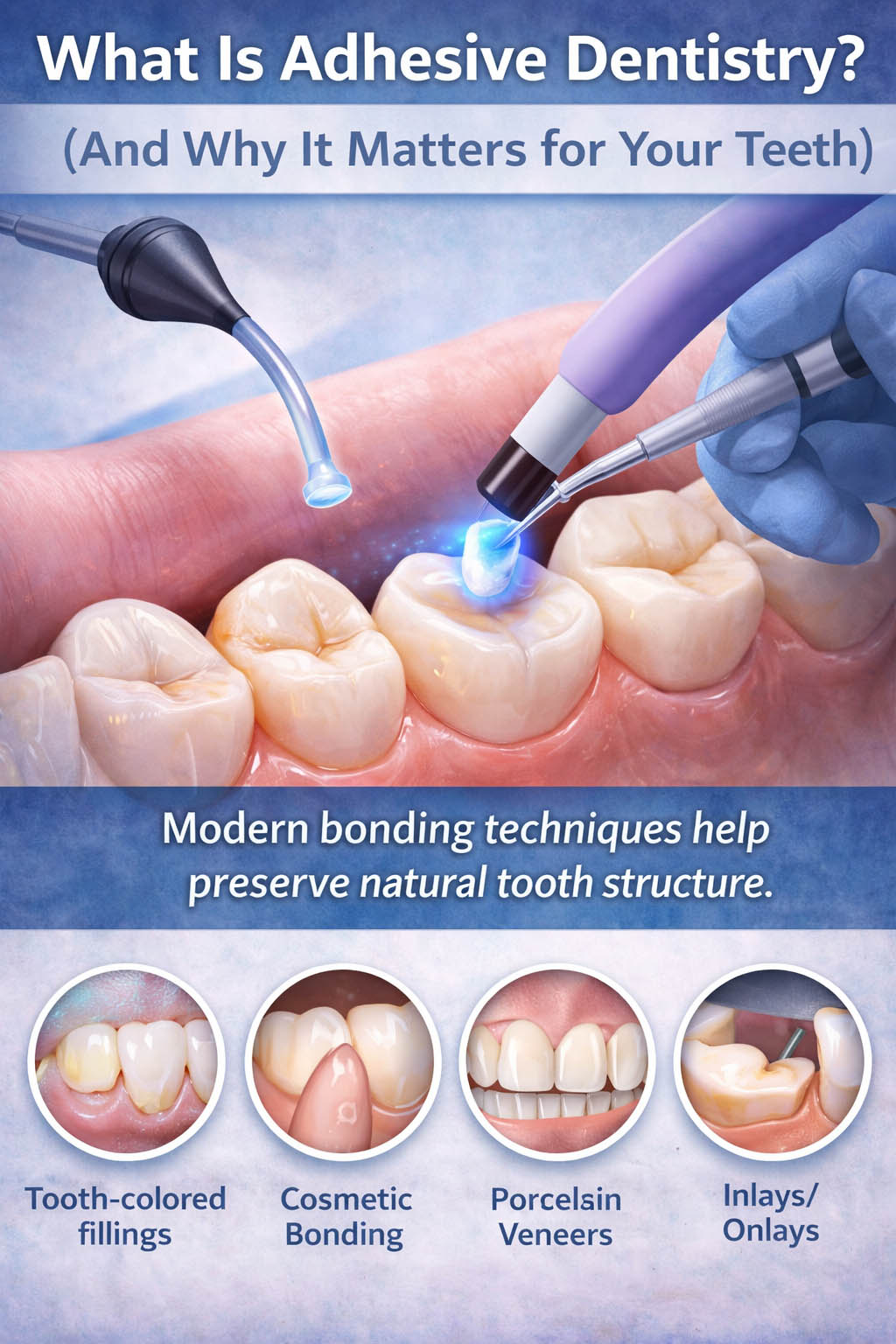
What Is Adhesive Dentistry? (And Why It Matters for Your Teeth)
Dentistry has evolved significantly over the years, not just in materials, but in philosophy. One of the most important advancements is the shift toward adhesive dentistry, a modern approach that allows dentists to restore teeth more conservatively while preserving natural structure.
Instead of relying primarily on mechanical retention—which often required removing more healthy tooth structure—adhesive dentistry uses advanced bonding techniques to attach restorations directly to the tooth.1,2
What is adhesive dentistry?
Adhesive dentistry refers to the use of bonding agents that chemically and mechanically attach restorative materials to enamel and dentin. These materials include composite fillings, bonding, veneers, and certain types of crowns.
This approach allows dentists to restore teeth with greater precision while minimizing the amount of natural tooth structure that needs to be removed.2
How adhesive dentistry is different from traditional methods
In the past, many dental restorations relied on shaping the tooth in a way that would physically hold the material in place. This often required removing additional healthy tooth structure to create retention.
With adhesive dentistry, restorations are bonded directly to the tooth surface. This reduces the need for aggressive preparation and allows for a more conservative approach to treatment.1,2
Benefits of adhesive dentistry
1. Preserves natural tooth structure
One of the biggest advantages is that less healthy enamel and dentin need to be removed. Preserving natural structure helps maintain the strength and integrity of the tooth over time.
2. Strengthens the remaining tooth
Bonded restorations can help reinforce the remaining tooth structure, distributing forces more evenly and reducing the risk of fracture.3
3. More conservative treatment options
Adhesive techniques make it possible to treat smaller areas of damage without removing large portions of the tooth.
4. Improved aesthetics
Modern composite and ceramic materials used in adhesive dentistry can closely match the natural color and translucency of teeth, creating a more natural-looking result.
Ready for a confident, healthy smile?
Located in Santa Ana California
Common treatments that use adhesive dentistry
Adhesive techniques are used in many modern dental procedures, including:
- Tooth-colored fillings
- Cosmetic bonding
- Porcelain veneers
- Inlays and onlays
- Some types of crowns
These treatments allow dentists to repair damage while maintaining as much of the original tooth as possible.
Why adhesive dentistry supports long-term oral health
Preserving natural tooth structure is one of the most important factors in long-term oral health. The more original enamel and dentin that remain, the better a tooth can withstand everyday forces and function naturally.
By minimizing unnecessary removal of healthy structure, adhesive dentistry helps extend the lifespan of the tooth and may reduce the need for more extensive treatment in the future.1,3
When adhesive dentistry may not be enough
While adhesive techniques are highly effective, they are not appropriate for every situation. Teeth with extensive structural damage, severe fractures, or heavy functional demands may still require more traditional restorations such as full crowns.
The best treatment depends on the condition of the tooth and the amount of remaining healthy structure.
What this means for patients at OC Dental Center of Santa Ana
At OC Dental Center of Santa Ana, adhesive dentistry plays an important role in delivering minimally invasive care. Dr. Pooneh Sabo focuses on preserving natural tooth structure whenever possible while using modern materials and techniques to restore strength and function.
This approach allows patients to receive effective treatment while maintaining the long-term health and integrity of their natural teeth.
References
- Stevens CD. Adhesive dentistry: changing restorative treatment for the better. Compend Contin Educ Dent. 2019.
- Alomran WK et al. Evolution of dental resin adhesives. J Funct Biomater. 2025.
- Van Meerbeek B et al. Adhesion to enamel and dentin: current status and future challenges. Oper Dent. 2003.
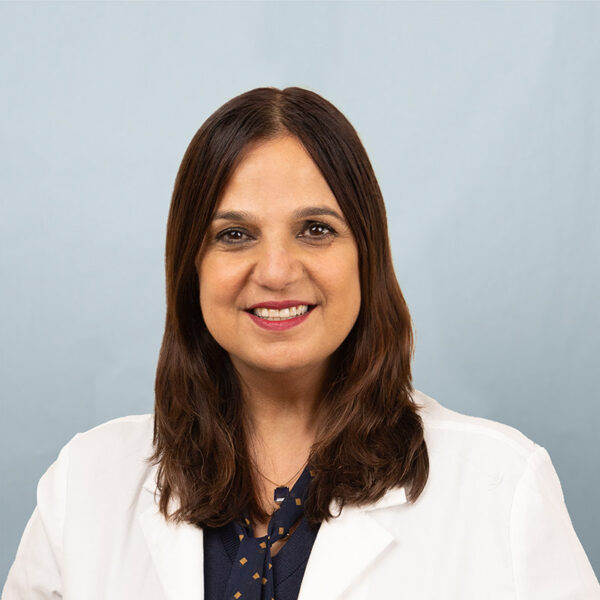
AUTHOR BIO: Dr. Pooneh Sabo D.D.S
Dr. Pooneh Sabo is a comprehensive cosmetic and functional dentist and founder of OC Dental Center in Orange County, California. With over two decades of clinical experience, she specializes in oral care ingredient safety, cosmetic dentistry, whitening technologies, and minimally invasive treatment focused on preserving natural tooth structure and long-term oral health.
