
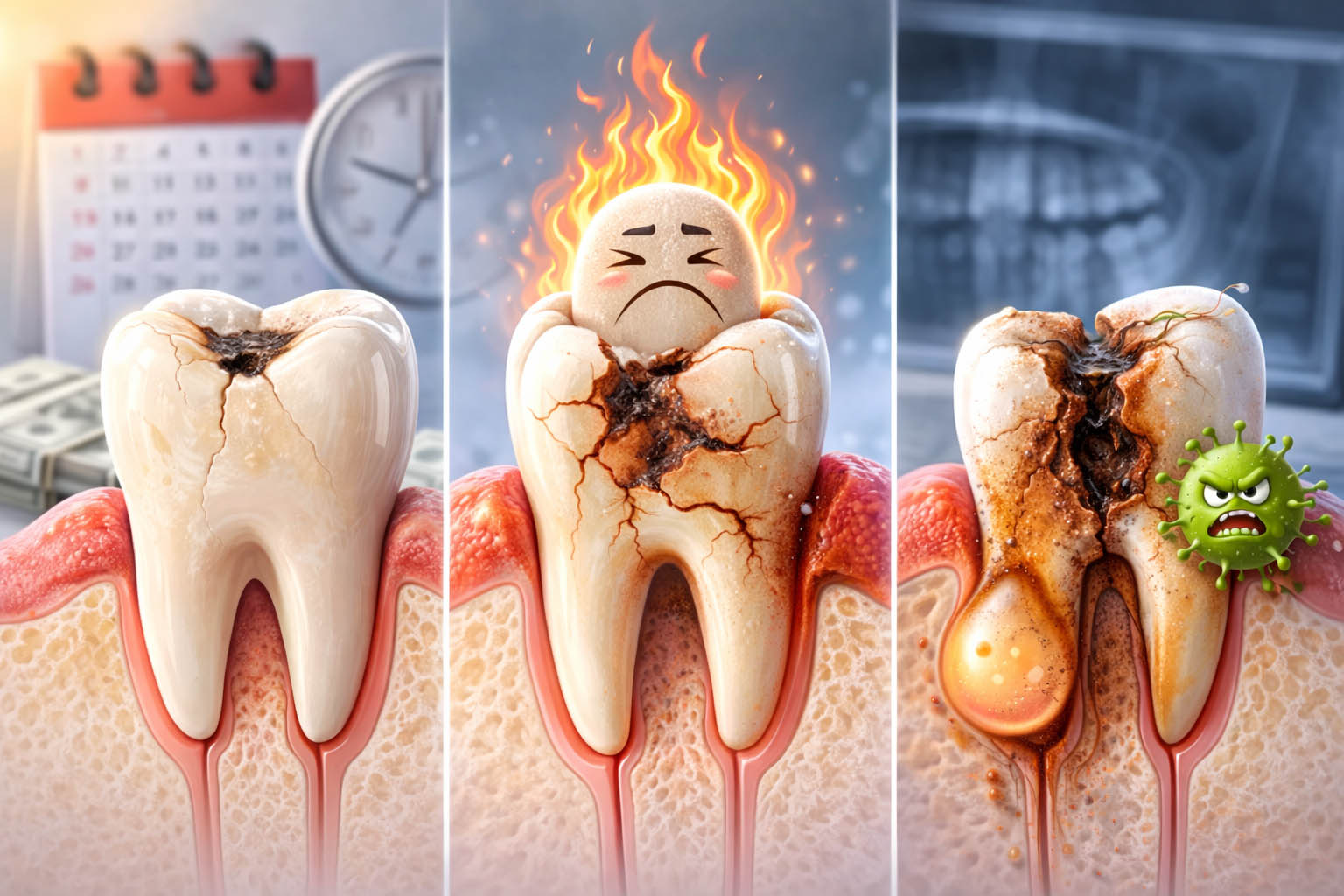
What Happens If You Delay Dental Treatment?
Many dental problems begin small. A tiny cavity, mild gum inflammation, or a minor crack in a tooth may not cause noticeable symptoms at first. Because of this, it can be tempting to delay treatment—especially if the tooth is not hurting.
However, most dental conditions do not resolve on their own. In many cases, delaying treatment allows the problem to progress, which can lead to more complex procedures and greater damage to the tooth or surrounding tissues.1,2
How small dental problems can grow over time
Dental disease is often progressive. This means that early problems typically become more advanced if left untreated.
Small cavities can grow deeper
Tooth decay usually begins as a small area of demineralization in the enamel. At this stage, the damage may be minor and treatable with a small filling. If the cavity continues to grow, it can reach the dentin and eventually the pulp, which contains the tooth’s nerve and blood supply.3
Once decay reaches the pulp, treatment may require root canal therapy or, in severe cases, extraction of the tooth.
Cracks can become fractures
A small crack in a tooth may initially cause little or no discomfort. But over time, chewing forces can cause the crack to widen. This may eventually lead to structural breakdown of the tooth or even a split tooth that cannot be repaired.4
When cracks are detected early, dentists can often protect the tooth with more conservative treatment.
Gum inflammation can progress to periodontal disease
Gingivitis, the early stage of gum disease, involves inflammation of the gums caused by plaque buildup. At this stage, the condition is often reversible with professional cleaning and improved oral hygiene.
If untreated, gingivitis can progress to periodontitis, a more serious infection that affects the supporting bone around the teeth. Periodontal disease can lead to gum recession, bone loss, and eventually tooth loss if not properly managed.2
Dental pain often appears later in the process
Many patients assume that a dental problem will hurt immediately. In reality, pain is often a later symptom. Cavities, cracks, and gum disease may progress for months—or even years—before discomfort becomes noticeable.
By the time pain appears, the condition may already require more extensive treatment than it would have earlier.
Ready for a confident, healthy smile?
Located in Santa Ana California
Why early treatment is often simpler
One of the main benefits of early dental care is that treatment is usually more conservative. Small cavities can often be treated with simple fillings, while larger areas of damage may require crowns, root canal therapy, or other procedures.
Addressing problems early also helps preserve more natural tooth structure, which plays an important role in the long-term strength and function of the tooth.
The long-term impact of untreated dental disease
In addition to affecting individual teeth, untreated oral infections may contribute to broader health concerns. Research has linked periodontal disease and chronic oral inflammation to systemic conditions such as cardiovascular disease, diabetes complications, and respiratory infections.5
Maintaining good oral health is therefore an important part of protecting overall health.
Common reasons patients delay treatment
Patients may postpone dental care for many reasons, including:
- Lack of pain or symptoms
- Busy schedules
- Concerns about cost
- Dental anxiety
While these concerns are understandable, delaying care often results in larger and more complex treatment later.
When you should schedule a dental evaluation
You should schedule a dental visit if you notice any of the following:
- Persistent tooth sensitivity
- Pain when chewing
- Bleeding or swollen gums
- A cracked or chipped tooth
- A filling that feels loose or broken
- Bad breath that does not improve
Even if symptoms seem minor, a dental exam can help determine whether early treatment may prevent further damage.
What this means for patients at OC Dental Center of Santa Ana
At OC Dental Center of Santa Ana, early diagnosis and preventive care are key priorities. By identifying dental problems early and addressing them promptly, patients can often avoid more extensive treatment and preserve their natural teeth for longer.
Regular exams, professional cleanings, and timely treatment recommendations help ensure that small concerns are addressed before they become larger oral health issues.
References
- Featherstone JDB. Dental caries: a dynamic disease process. Australian Dental Journal. 2008.
- American Academy of Periodontology. Periodontal Disease Overview. Accessed March 2026.
- Selwitz RH, Ismail AI, Pitts NB. Dental caries. Lancet. 2007.
- American Association of Endodontists. Cracked Teeth. Accessed March 2026.
- Lockhart PB et al. Periodontal disease and systemic health. Journal of the American Dental Association. 2012.

AUTHOR BIO: Dr. Pooneh Sabo D.D.S
Dr. Pooneh Sabo is a comprehensive cosmetic and functional dentist and founder of OC Dental Center in Orange County, California. With over two decades of clinical experience, she specializes in oral care ingredient safety, cosmetic dentistry, whitening technologies, and minimally invasive treatment focused on preserving natural tooth structure and long-term oral health.
