
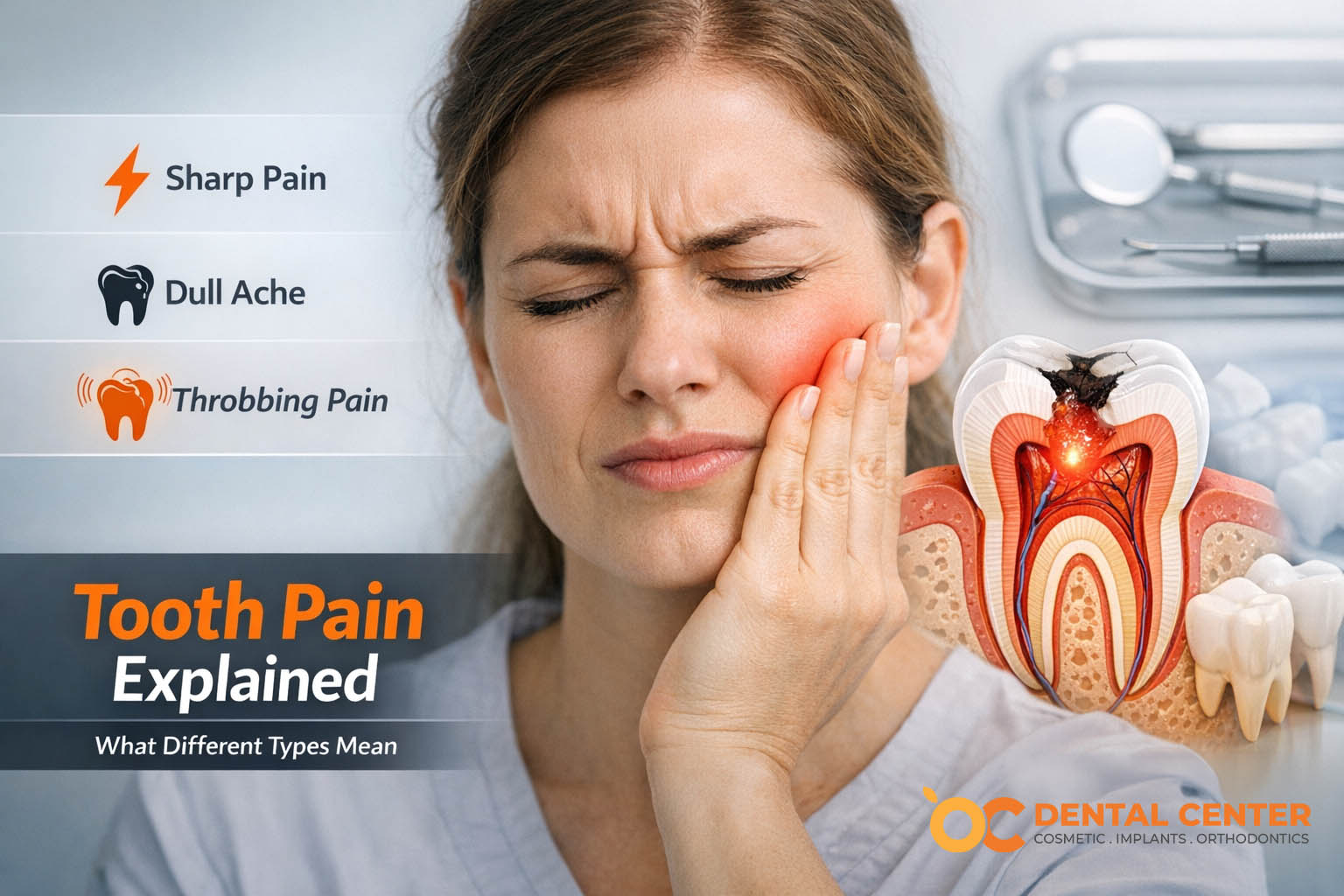
Tooth Pain Explained: What Different Types of Pain Mean
Tooth pain can range from mild discomfort to severe, persistent pain—and each type of pain can tell you something different about your oral health. Understanding the cause of your tooth pain is key to getting the right treatment early and preventing more serious dental issues.
At OC Dental Center in Santa Ana, we often see patients who aren’t sure whether their tooth pain is something minor or a sign of a more serious problem. In this guide, we’ll break down the most common types of tooth pain and what they may indicate.
Why Tooth Pain Should Never Be Ignored
Pain is your body’s way of signaling that something is wrong. In dentistry, even mild discomfort can be an early warning sign of conditions like tooth decay, infection, or gum disease. Left untreated, these issues can progress and require more complex procedures such as root canal therapy or even tooth extraction.
Early diagnosis not only relieves pain faster but also helps preserve your natural teeth and reduce treatment costs over time [1].
Sharp Tooth Pain: What It Could Mean
Sharp, sudden pain—especially when biting or consuming hot or cold foods—is one of the most common complaints.
Possible Causes of Sharp Pain
- Tooth decay (cavities): Exposed dentin can cause sharp sensitivity.
- Cracked or fractured tooth: Pain when biting is a common sign.
- Worn enamel: Often caused by grinding (bruxism) or aggressive brushing.
- Dental sensitivity: Especially when exposed to temperature changes.
If you’re experiencing sharp pain, it’s important to schedule an evaluation. Treatments may include fillings, crowns, or desensitizing treatments depending on the cause.
Dull or Aching Pain: A Sign of Something Deeper
A dull, constant ache is often more concerning than occasional sharp pain. It may indicate inflammation or infection deeper within the tooth or surrounding tissues.
Common Causes of Dull Tooth Pain
- Tooth infection (abscess): A bacterial infection inside the tooth.
- Impacted food or debris: Can irritate gums and surrounding tissue.
- Gum disease: Early or advanced periodontal issues.
- Grinding or clenching: Causes stress on teeth and jaw.
Persistent dull pain should not be ignored, as infections can spread and worsen over time. In many cases, treatment may involve a root canal to remove infected tissue and save the tooth.
Lingering Sensitivity: Hot or Cold That Won’t Go Away
If you feel sensitivity that lingers long after exposure to hot or cold foods, it could indicate nerve involvement.
What Lingering Pain May Indicate
- Pulp inflammation: The inner nerve of the tooth may be irritated.
- Deep decay: Cavities that have reached the inner layers.
- Failing dental work: Old fillings or crowns may need replacement.
This type of pain is often a sign that the tooth may require more advanced treatment, such as endodontic therapy.
Ready for a confident, healthy smile?
Located in Santa Ana California
Throbbing Pain and Swelling: Signs of Infection
Throbbing pain, especially when accompanied by swelling, fever, or a bad taste in the mouth, is often a sign of a dental abscess. This is a serious condition that requires immediate attention.
Symptoms of a Dental Abscess
- Persistent, pulsating pain
- Swelling in the gums or face
- Sensitivity to pressure
- Fever or general discomfort
If you suspect an abscess, contact a dentist right away. Treatment may include drainage, antibiotics, and a root canal or extraction depending on severity [2].
Pain When Biting: A Hidden Problem
Pain that occurs specifically when biting down can be easy to overlook, but it often points to structural damage.
Potential Causes
- Cracked tooth syndrome
- Loose or damaged fillings
- Misaligned bite
Early detection is critical to prevent further damage. Treatments may include crowns or bite adjustments.
Referred Pain: When the Source Isn’t Obvious
Sometimes, tooth pain doesn’t originate from the tooth itself. Sinus infections, jaw issues (TMJ), or nerve-related conditions can cause pain that feels like it’s coming from your teeth.
A comprehensive dental exam helps determine whether the pain is dental-related or requires referral to another specialist.
When Should You See a Dentist?
You should schedule a dental visit if you experience:
- Pain lasting more than 1–2 days
- Swelling or fever
- Difficulty chewing or biting
- Sensitivity that worsens over time
Prompt care can prevent complications and often allows for simpler, less invasive treatments.
How to Prevent Tooth Pain
Many causes of tooth pain are preventable with proper oral hygiene and routine dental care.
- Brush twice daily with fluoride toothpaste
- Floss daily to remove plaque between teeth
- Visit your dentist regularly for exams and cleanings
- Avoid excessive sugar and acidic foods
Preventive care is one of the most effective ways to avoid unexpected dental pain and costly procedures.
Final Thoughts
Tooth pain is never something to ignore. Whether it’s sharp, dull, or lingering, each type of discomfort provides valuable clues about your oral health. The sooner you address the issue, the better your chances of preserving your natural teeth and avoiding more extensive treatment.
If you’re experiencing tooth pain in Santa Ana or surrounding areas, the team at OC Dental Center is here to help diagnose the issue and provide personalized care.
References
- American Dental Association. “Tooth Pain and Cavities.”
- National Institute of Dental and Craniofacial Research. “Tooth Decay and Dental Infection.”
- Cleveland Clinic. “Toothache: Causes, Symptoms, and Treatment.”
- NHS. “Toothache Overview.”

AUTHOR BIO: Dr. Pooneh Sabo D.D.S
Dr. Pooneh Sabo is a comprehensive cosmetic and functional dentist and founder of OC Dental Center in Orange County, California. With over two decades of clinical experience, she specializes in oral care ingredient safety, cosmetic dentistry, whitening technologies, and minimally invasive treatment focused on preserving natural tooth structure and long-term oral health.
