
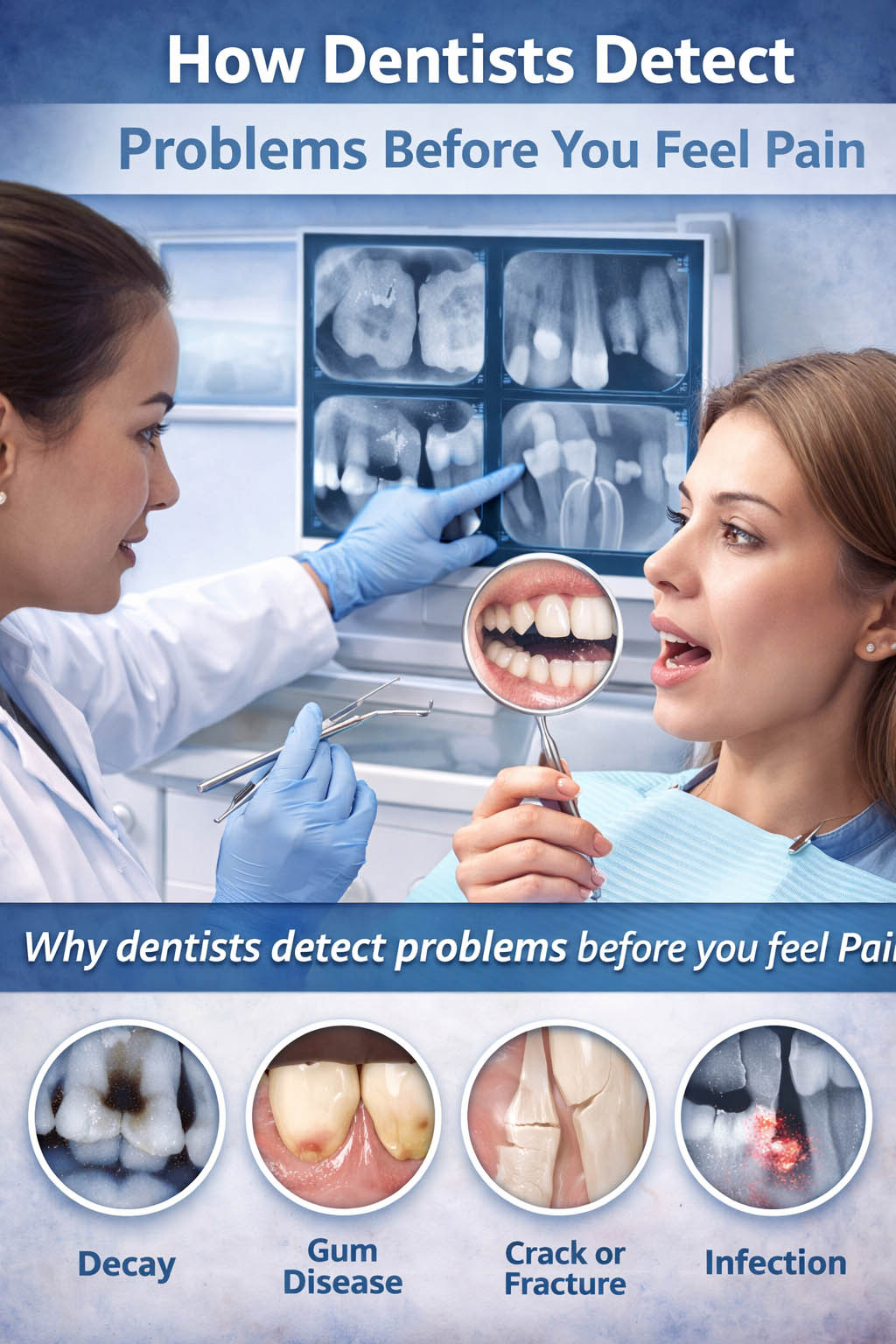
How Dentists Detect Problems Before You Feel Pain
Many patients assume that if their teeth don’t hurt, everything must be fine. However, in dentistry, pain is often a late symptom. By the time discomfort appears, a condition may already be more advanced.
One of the most important benefits of regular dental visits is early detection. Dentists are trained to identify small changes in the teeth and gums long before they become painful or require more complex treatment.1,2
Why dental problems don’t always hurt right away
Tooth decay, gum disease, and structural damage often begin gradually. In the early stages, these conditions may not affect the nerve of the tooth or cause noticeable symptoms.
For example, a cavity may start in the outer enamel layer, where there are no nerve endings. As long as the decay remains in this layer, patients may not feel any discomfort.1
Similarly, early gum disease (gingivitis) may cause mild inflammation or bleeding, but it is often painless. Without treatment, it can progress to more serious periodontal disease over time.2
How dentists identify early signs of problems
During a routine dental exam, dentists evaluate multiple aspects of oral health—not just visible cavities. This includes examining the teeth, gums, bite, and surrounding tissues for subtle changes.
Visual examination
Dentists look for early signs of decay, cracks, enamel wear, gum recession, and inflammation. Even small changes in color, texture, or structure can indicate the beginning of a problem.
Digital X-rays
Digital X-rays allow dentists to see areas that are not visible during a standard exam. This includes decay between teeth, problems beneath existing fillings, bone levels, and infections at the root of a tooth.3
Monitoring changes over time
One of the advantages of regular visits is the ability to compare current findings with previous records. This helps identify changes that may not be obvious in a single visit, such as gradual wear, shifting, or early bone loss.
Early detection means more conservative treatment
When dental problems are identified early, treatment is often simpler and less invasive. A small cavity may be treated with a filling, while a larger untreated cavity could require a crown or root canal therapy.
Detecting issues early also helps preserve more natural tooth structure, which plays a key role in long-term oral health.
Ready for a confident, healthy smile?
Located in Santa Ana California
The role of preventive care
Preventive dentistry focuses on maintaining oral health and reducing the risk of future problems. Regular dental cleanings remove plaque and tartar buildup, while exams help detect issues before they progress.
Preventive care also includes patient education, helping individuals understand how daily habits affect their teeth and gums.
Common conditions detected early
During routine dental visits, dentists commonly identify early signs of:
- Cavities between teeth
- Gum inflammation and early periodontal disease
- Cracked or weakened teeth
- Enamel erosion and wear
- Bite-related stress or grinding
Addressing these conditions early can help prevent more extensive and costly treatment later.
Why regular dental visits matter
Even patients with good oral hygiene can develop dental issues over time. Regular dental visits provide an opportunity to monitor oral health and address concerns before they become more serious.
Most patients benefit from routine visits every six months, although some may require more frequent care depending on their individual risk factors.1,2
What this means for patients at OC Dental Center of Santa Ana
At OC Dental Center of Santa Ana, early detection is a key part of preventive care. Dr. Pooneh Sabo uses modern diagnostic tools and thorough exams to identify potential issues before they cause discomfort.
By focusing on early diagnosis and minimally invasive treatment, patients can maintain healthier teeth, avoid unnecessary complications, and preserve their natural smiles for longer.
References
- Selwitz RH, Ismail AI, Pitts NB. Dental caries. Lancet. 2007.
- American Academy of Periodontology. Gingivitis. Accessed March 2026.
- American Dental Association. Dental Radiographic Examinations: Recommendations. Accessed March 2026.

AUTHOR BIO: Dr. Pooneh Sabo D.D.S
Dr. Pooneh Sabo is a comprehensive cosmetic and functional dentist and founder of OC Dental Center in Orange County, California. With over two decades of clinical experience, she specializes in oral care ingredient safety, cosmetic dentistry, whitening technologies, and minimally invasive treatment focused on preserving natural tooth structure and long-term oral health.
