
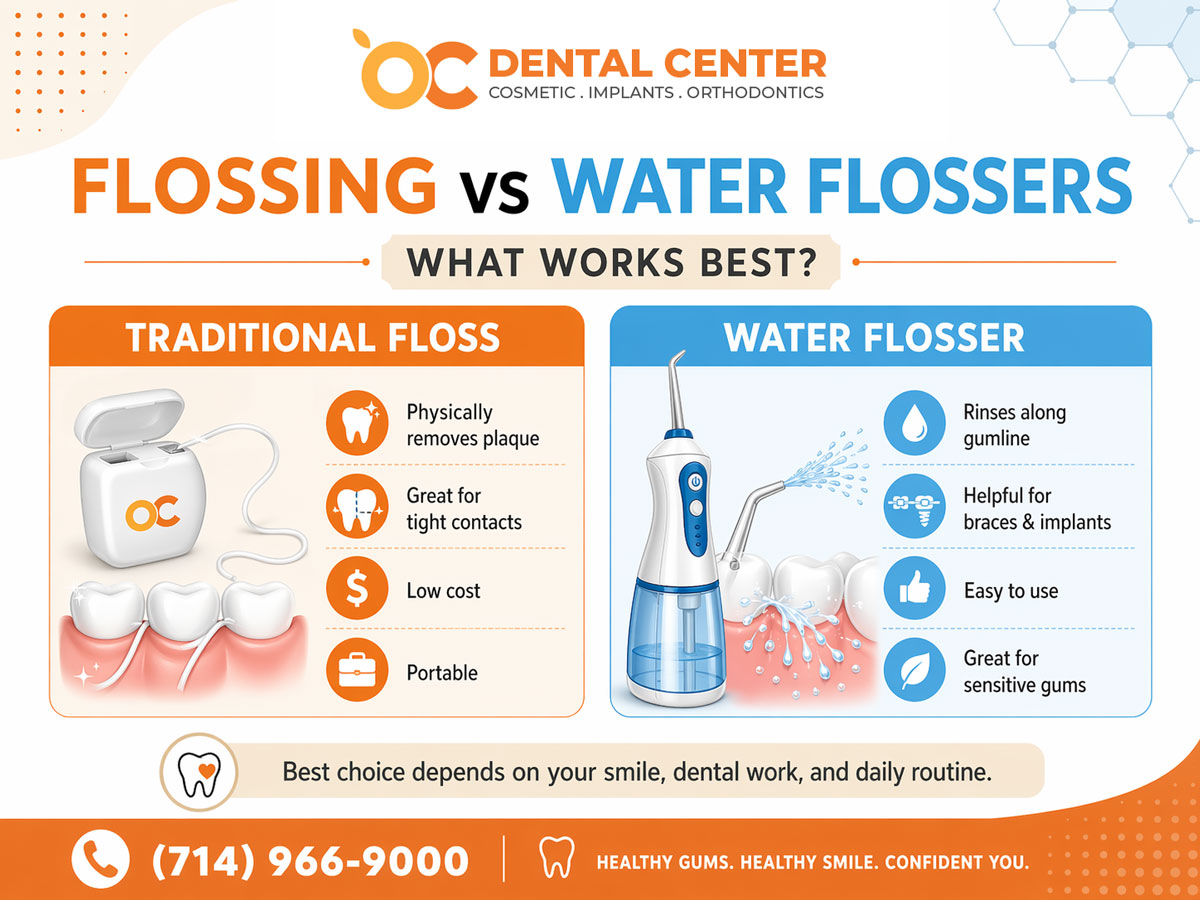
Flossing vs Water Flossers: What Works Best?
Brushing your teeth is essential, but it does not clean every surface of your smile. Plaque and food particles can collect between teeth and below the gumline, where toothbrush bristles cannot reach. That is why cleaning between your teeth is such an important part of daily oral care.
At OC Dental Center in Santa Ana, patients often ask whether traditional floss or a water flosser is better. The answer depends on your gums, dental work, dexterity, and daily habits. In this guide, we’ll compare flossing and water flossers so you can choose the best option for your smile.
Why Cleaning Between Teeth Matters
Plaque is a sticky film of bacteria that forms on teeth throughout the day. When plaque remains between teeth, it can contribute to cavities, gum inflammation, tartar buildup, and bad breath [1].
Because brushing alone cannot fully clean between teeth, dentists recommend adding interdental cleaning to your daily routine. This may include string floss, floss picks, interdental brushes, or a water flosser.
What Is Traditional Floss?
Traditional floss is a thin strand used to physically remove plaque and debris from between teeth. It can be waxed, unwaxed, flavored, or tape-style depending on your preference.
Benefits of Traditional Floss
- Directly scrapes plaque from tooth surfaces
- Affordable and easy to carry
- Works well for tight contacts between teeth
- Requires no electricity or charging
When used correctly, string floss is a simple and effective tool for preventing cavities between teeth and supporting gum health.
What Is a Water Flosser?
A water flosser uses a focused stream of water to clean between teeth and along the gumline. Many people know these devices by brand names, but the general term is water flosser or oral irrigator.
Benefits of Water Flossers
- Helpful for cleaning around braces, bridges, and implants
- May be easier for people with limited hand mobility
- Can feel gentler for sensitive gums
- Helps flush food particles from hard-to-reach areas
Water flossers can be especially useful for patients who find string floss difficult or uncomfortable.
Flossing vs Water Flossers: Key Differences
| Feature | Traditional Floss | Water Flosser |
|---|---|---|
| Plaque Removal | Physically scrapes plaque from tooth surfaces | Flushes debris and bacteria with water pressure |
| Ease of Use | Requires technique and hand control | Often easier for braces, implants, and limited dexterity |
| Cost | Low cost | Higher upfront cost |
| Portability | Very portable | Less portable, depending on model |
| Best For | Tight spaces and daily plaque removal | Gumline cleaning, braces, bridges, implants, and convenience |
Which Removes Plaque Better?
Traditional floss is effective because it physically contacts the tooth surface and disrupts plaque. However, water flossers may help reduce gum bleeding and inflammation for some patients, especially when used consistently [2].
The most important factor is consistency. The best interdental cleaner is the one you will actually use every day.
Ready for a confident, healthy smile?
Located in Santa Ana California
Who May Benefit Most from a Water Flosser?
A water flosser may be especially helpful if you have:
- Braces or orthodontic appliances
- Dental implants
- Dental bridges
- Crowns with hard-to-clean margins
- Gum sensitivity or bleeding
- Difficulty using string floss
Patients with dental work often find water flossers helpful because they can clean around areas where string floss may be harder to maneuver.
Who May Benefit Most from Traditional Floss?
Traditional floss may be best if you:
- Have tight spaces between teeth
- Want a low-cost option
- Prefer something portable
- Can comfortably use proper flossing technique
For many patients, string floss remains an excellent daily tool.
Can You Use Both?
Yes. In many cases, using both traditional floss and a water flosser can be beneficial. Floss can physically remove plaque between tight contacts, while a water flosser can rinse along the gumline and around dental work.
Your dentist or hygienist can show you how to combine tools effectively based on your mouth.
How to Floss Correctly
If you use string floss, technique matters.
- Use a clean section of floss for each space
- Curve the floss into a “C” shape around each tooth
- Move gently under the gumline without snapping
- Clean both sides of every space
Bleeding may happen if gums are inflamed, but it should improve with consistent care and professional cleanings.
How to Use a Water Flosser
To get the most from a water flosser:
- Start with a lower pressure setting
- Aim the tip along the gumline
- Pause briefly between teeth
- Lean over the sink to reduce splashing
- Clean the device according to instructions
Using the right pressure is important, especially if your gums are sensitive.
What If Your Gums Bleed When Flossing?
Bleeding gums are often a sign of inflammation caused by plaque buildup. If bleeding continues after consistent brushing and interdental cleaning, schedule a dental exam. Bleeding can be an early sign of gingivitis or gum disease.
When to See a Dentist in Santa Ana
If you are unsure which flossing method is right for you—or if you have bleeding gums, bad breath, implants, braces, or bridges—your dental team can help.
At OC Dental Center, we provide personalized oral hygiene recommendations based on your teeth, gums, dental work, and lifestyle. Our goal is to help you maintain healthy gums and prevent future dental problems.
Final Thoughts
Traditional floss and water flossers can both support oral health, but they work differently. String floss physically removes plaque between teeth, while water flossers help flush debris and clean along the gumline. For many patients, the best choice depends on comfort, consistency, and dental needs.
If you want help choosing the right flossing routine in Santa Ana, our team is here to guide you toward healthier gums and a cleaner smile.
References
- American Dental Association. “Floss and Interdental Cleaners.”
- Cleveland Clinic. “Water Flossers: Benefits and Use.”
- National Institute of Dental and Craniofacial Research. “Periodontal Disease.”
- NHS. “How to Keep Your Teeth Clean.”

AUTHOR BIO: Dr. Pooneh Sabo D.D.S
Dr. Pooneh Sabo is a comprehensive cosmetic and functional dentist and founder of OC Dental Center in Orange County, California. With over two decades of clinical experience, she specializes in oral care ingredient safety, cosmetic dentistry, whitening technologies, and minimally invasive treatment focused on preserving natural tooth structure and long-term oral health.