
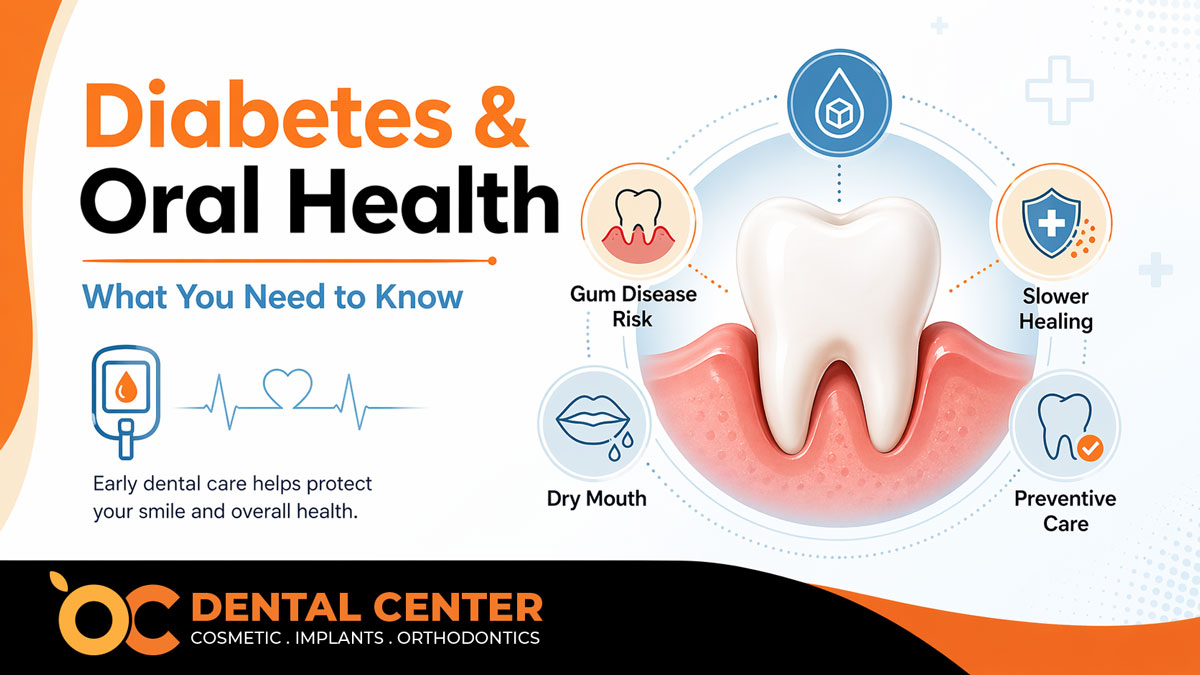
Diabetes and Oral Health: What You Need to Know
Diabetes affects more than blood sugar—it can also have a major impact on your teeth, gums, saliva, and ability to heal after dental treatment. Many patients are surprised to learn that oral health and diabetes are closely connected.
At OC Dental Center in Santa Ana, we help patients understand how medical conditions like diabetes can influence oral health. With proper preventive care, regular dental visits, and good blood sugar management, many diabetes-related dental complications can be reduced or managed early.
How Diabetes Affects Oral Health
Diabetes can affect the body’s ability to fight infection and heal properly. When blood sugar levels are not well controlled, bacteria in the mouth can grow more easily, and the gums may become more vulnerable to inflammation and infection [1].
This is one reason people with diabetes may have a higher risk of gum disease, dry mouth, fungal infections, and delayed healing after dental procedures.
The Link Between Diabetes and Gum Disease
Gum disease, also known as periodontal disease, is one of the most common oral health concerns associated with diabetes. It begins with plaque buildup along the gumline and can progress into infection that damages the tissues and bone supporting the teeth.
Why Diabetes Can Increase Gum Disease Risk
- Reduced ability to fight bacterial infection
- More inflammation in gum tissue
- Slower healing response
- Higher risk when blood sugar is poorly controlled
The relationship works both ways: gum disease may also make blood sugar harder to manage because chronic inflammation can affect the body’s insulin response [2].
Signs of Gum Disease to Watch For
If you have diabetes, it is especially important to recognize early gum disease symptoms.
- Bleeding gums when brushing or flossing
- Red, swollen, or tender gums
- Persistent bad breath
- Gum recession or teeth looking longer
- Loose or shifting teeth
Because gum disease can progress quietly, regular dental exams are essential even if you are not experiencing pain.
Dry Mouth and Diabetes
Dry mouth, also called xerostomia, can occur when the mouth does not produce enough saliva. Some patients with diabetes experience dry mouth due to high blood sugar levels, dehydration, or medications.
Saliva helps rinse away food particles, neutralize acids, and protect teeth from decay. When saliva is reduced, the risk of cavities, bad breath, and gum irritation increases.
Signs of Dry Mouth
- Sticky or dry feeling in the mouth
- Frequent thirst
- Bad breath
- Difficulty chewing or swallowing dry foods
- Increased cavities
If dry mouth is persistent, your dentist can recommend strategies to protect your teeth and gums.
Diabetes and Slow Healing After Dental Treatment
Diabetes can affect healing after dental procedures such as extractions, gum therapy, oral surgery, and dental implant treatment. When blood sugar is not well controlled, healing may take longer and the risk of infection may increase [3].
This does not mean patients with diabetes cannot receive dental care. It means careful planning, communication, and preventive care are especially important.
Ready for a confident, healthy smile?
Located in Santa Ana California
Other Oral Health Concerns Linked to Diabetes
In addition to gum disease and dry mouth, diabetes may contribute to other oral health concerns.
Tooth Decay
Dry mouth and higher sugar levels in saliva may increase the risk of cavities.
Oral Thrush
People with diabetes may be more prone to fungal infections such as oral candidiasis, especially when blood sugar is poorly controlled or dry mouth is present.
Burning Mouth or Taste Changes
Some patients experience burning sensations, altered taste, or increased mouth sensitivity.
Dental Care Tips for Patients with Diabetes
Good daily habits and consistent professional care can make a major difference.
- Brush twice daily with fluoride toothpaste
- Floss daily to remove plaque between teeth
- Stay hydrated to support saliva flow
- Manage blood sugar as recommended by your physician
- Tell your dentist about your diabetes diagnosis and medications
- Schedule regular dental exams and cleanings
Your dentist may recommend more frequent cleanings if you have signs of gum disease or higher periodontal risk.
Why Communication Between Your Dentist and Physician Matters
Dental care is safest and most effective when your dental team understands your medical history. If you have diabetes, share your most recent blood sugar control information, medications, and any healing concerns.
For more complex procedures, your dentist may coordinate with your physician to help reduce risks and support healing.
Can Treating Gum Disease Help Diabetes Management?
Research suggests that periodontal treatment may help improve gum health and may support better blood sugar control for some patients, although results can vary [4].
Regardless of the effect on blood sugar, treating gum disease is important for preventing tooth loss, infection, and long-term oral health complications.
When to See a Dentist in Santa Ana
If you have diabetes, do not wait for pain before seeing a dentist. Schedule a dental exam if you notice bleeding gums, dry mouth, bad breath, loose teeth, or increased cavities.
At OC Dental Center, we provide thorough gum health evaluations, preventive cleanings, digital X-rays when needed, and personalized recommendations for patients managing diabetes.
Final Thoughts
Diabetes and oral health are closely connected. Diabetes can increase the risk of gum disease, dry mouth, tooth decay, infections, and slower healing—but with consistent dental care and good daily habits, these risks can be managed.
If you have diabetes and are looking for dental care in Santa Ana, our team is here to help protect your smile and support your long-term oral health.
References
- American Diabetes Association. “Diabetes and Oral Health.”
- Centers for Disease Control and Prevention. “Diabetes and Gum Disease.”
- National Institute of Dental and Craniofacial Research. “Diabetes and Oral Health.”
- National Library of Medicine. “Periodontal Treatment and Glycemic Control.”

AUTHOR BIO: Dr. Pooneh Sabo D.D.S
Dr. Pooneh Sabo is a comprehensive cosmetic and functional dentist and founder of OC Dental Center in Orange County, California. With over two decades of clinical experience, she specializes in oral care ingredient safety, cosmetic dentistry, whitening technologies, and minimally invasive treatment focused on preserving natural tooth structure and long-term oral health.