
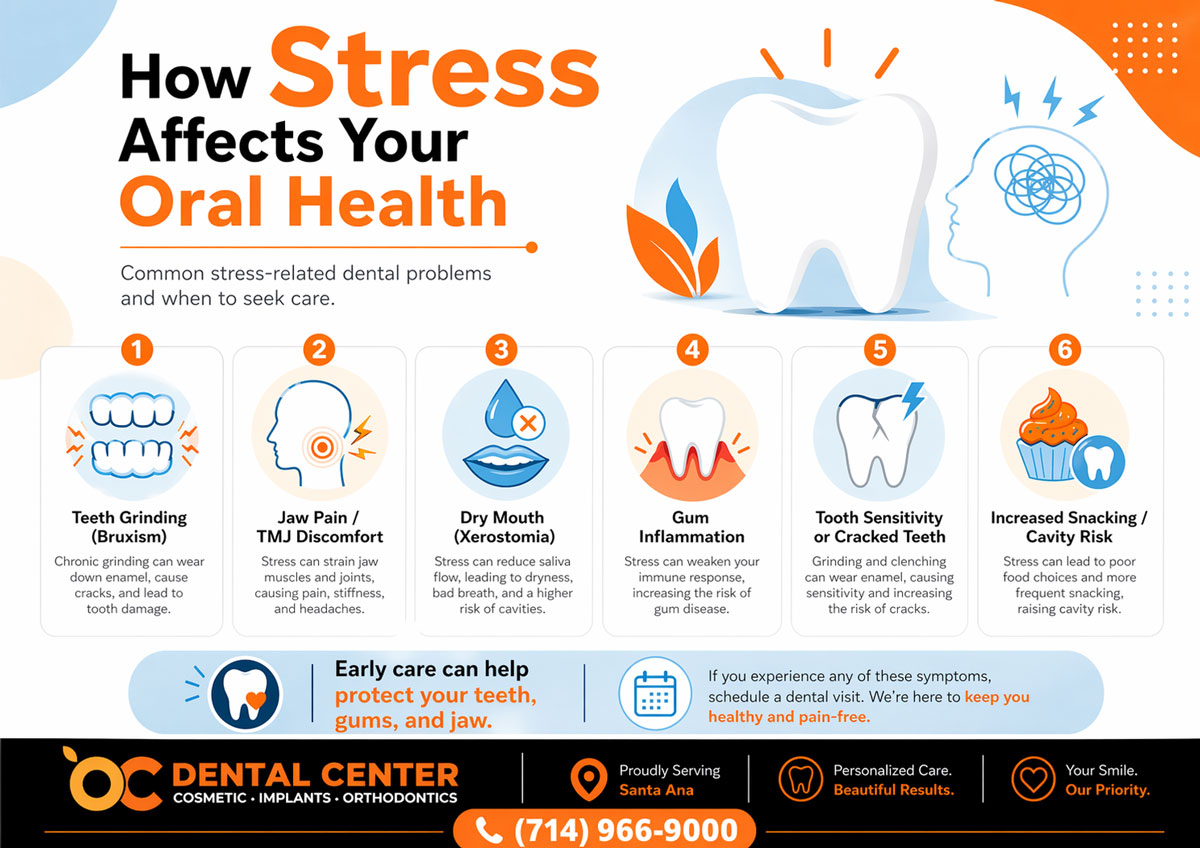
How Stress Affects Your Oral Health
Stress can affect your body in many ways, but one area patients often overlook is oral health. When stress levels rise, habits like jaw clenching, teeth grinding, snacking, and inconsistent home care can become more common. Over time, these changes may increase the risk of tooth wear, jaw pain, cavities, gum inflammation, and other dental concerns.
At OC Dental Center in Santa Ana, we help patients identify oral health problems that may be connected to stress and daily habits. Understanding the connection can help you protect your teeth, gums, and jaw before small issues become bigger problems.
How Stress and Oral Health Are Connected
Stress can influence oral health both directly and indirectly. Some effects happen because stress changes the body’s immune response, while others happen because people may grind their teeth, clench their jaw, snack more often, or skip parts of their oral hygiene routine during busy or difficult seasons [1].
The mouth often shows signs of stress earlier than people expect. Tooth sensitivity, headaches, jaw soreness, or gum irritation may all be clues that stress is affecting your smile.
1. Teeth Grinding and Clenching
One of the most common stress-related dental concerns is bruxism, which means grinding or clenching the teeth. Some people clench during the day, while others grind their teeth at night without realizing it.
Signs of Stress-Related Grinding
- Morning jaw soreness
- Worn or flattened teeth
- Tooth sensitivity
- Headaches near the temples
- Chipped, cracked, or damaged teeth
Grinding places heavy force on the teeth and jaw joints. If untreated, it may contribute to enamel wear, cracked teeth, TMJ discomfort, and damage to crowns or fillings.
2. Jaw Pain and TMJ Symptoms
Stress can cause tension in the jaw muscles, especially if you clench your teeth throughout the day. This tension may affect the temporomandibular joints, commonly called the TMJ.
Stress-related jaw symptoms may include:
- Jaw clicking or popping
- Difficulty opening fully
- Pain while chewing
- Facial soreness
- Ear-area discomfort
A dental evaluation can help determine whether your symptoms are related to grinding, bite imbalance, jaw muscle tension, or another issue.
3. Dry Mouth
Stress may contribute to dry mouth, either directly or indirectly. Some people breathe through their mouth more during stress, drink less water, consume more caffeine, or take medications that reduce saliva flow.
Saliva plays an important protective role by washing away food particles, neutralizing acids, and helping defend against cavities. When saliva is reduced, the risk of tooth decay, bad breath, and gum irritation can increase [2].
4. Gum Inflammation and Immune Response
Stress can affect how the body responds to inflammation and infection. When combined with plaque buildup, stress may make gum irritation more noticeable or harder to manage.
Common gum symptoms include:
- Bleeding when brushing or flossing
- Red or swollen gums
- Tender gum tissue
- Persistent bad breath
While stress alone does not usually cause gum disease, it can make it harder to maintain the habits that keep gums healthy.
Ready for a confident, healthy smile?
Located in Santa Ana California
5. Increased Snacking and Acid Exposure
During stressful periods, many people snack more frequently or reach for sugary, acidic, or processed foods. Frequent snacking exposes teeth to repeated acid attacks, which can weaken enamel and increase cavity risk.
Examples of higher-risk choices include:
- Soda, energy drinks, or sweet coffee drinks
- Candy or sticky snacks
- Chips, crackers, and refined carbohydrates
- Frequent sipping throughout the day
Drinking water, limiting grazing, and choosing tooth-friendly snacks can help reduce the impact.
6. Inconsistent Brushing and Flossing
When life feels overwhelming, routines may become less consistent. Skipping brushing or flossing allows plaque to build up, increasing the risk of cavities, gum inflammation, and bad breath.
Even during stressful seasons, simple habits can make a meaningful difference:
- Brush twice daily with fluoride toothpaste
- Floss once daily
- Drink water throughout the day
- Keep regular dental cleaning appointments
How Dentists Help Protect Your Teeth During Stressful Periods
If stress is affecting your oral health, your dentist can help identify early signs of damage and recommend ways to protect your teeth and gums.
Custom Night Guards
If you grind or clench at night, a custom night guard can help protect teeth from excessive force and reduce wear.
Bite and TMJ Evaluation
Your dentist can evaluate jaw movement, bite balance, tooth wear, and muscle tenderness to determine whether jaw tension is contributing to symptoms.
Preventive Cleanings and Exams
Regular cleanings remove plaque and tartar buildup, while exams help detect cavities, cracks, gum disease, and enamel erosion early.
Fluoride or Sensitivity Treatments
If stress-related grinding or dry mouth has contributed to sensitivity, your dentist may recommend fluoride treatments, desensitizing products, or enamel-protective care.
At-Home Tips to Reduce Stress-Related Dental Problems
While stress management looks different for everyone, these dental-focused habits may help reduce oral health risks:
- Keep your teeth slightly apart when resting
- Avoid chewing ice, pens, or fingernails
- Limit caffeine late in the day
- Use a soft-bristled toothbrush
- Drink water after snacks or acidic drinks
- Schedule dental care before symptoms worsen
When to See a Dentist in Santa Ana
You should schedule a dental evaluation if stress is accompanied by jaw pain, headaches, tooth sensitivity, cracked teeth, bleeding gums, or dry mouth.
At OC Dental Center, we can evaluate your teeth, gums, bite, and jaw function to help identify stress-related dental concerns early. Our goal is to protect your smile with practical, personalized care.
Final Thoughts
Stress can affect your oral health in more ways than most people realize. Teeth grinding, jaw tension, dry mouth, gum inflammation, snacking changes, and skipped routines can all increase the risk of dental problems.
If you are noticing symptoms during a stressful season, early dental care can help prevent lasting damage and keep your smile healthy.
References
- American Dental Association. “Stress and Oral Health.”
- National Institute of Dental and Craniofacial Research. “Dry Mouth.”
- Cleveland Clinic. “Bruxism: Causes, Symptoms, and Treatment.”
- NHS. “Teeth Grinding (Bruxism).”

AUTHOR BIO: Dr. Pooneh Sabo D.D.S
Dr. Pooneh Sabo is a comprehensive cosmetic and functional dentist and founder of OC Dental Center in Orange County, California. With over two decades of clinical experience, she specializes in oral care ingredient safety, cosmetic dentistry, whitening technologies, and minimally invasive treatment focused on preserving natural tooth structure and long-term oral health.