
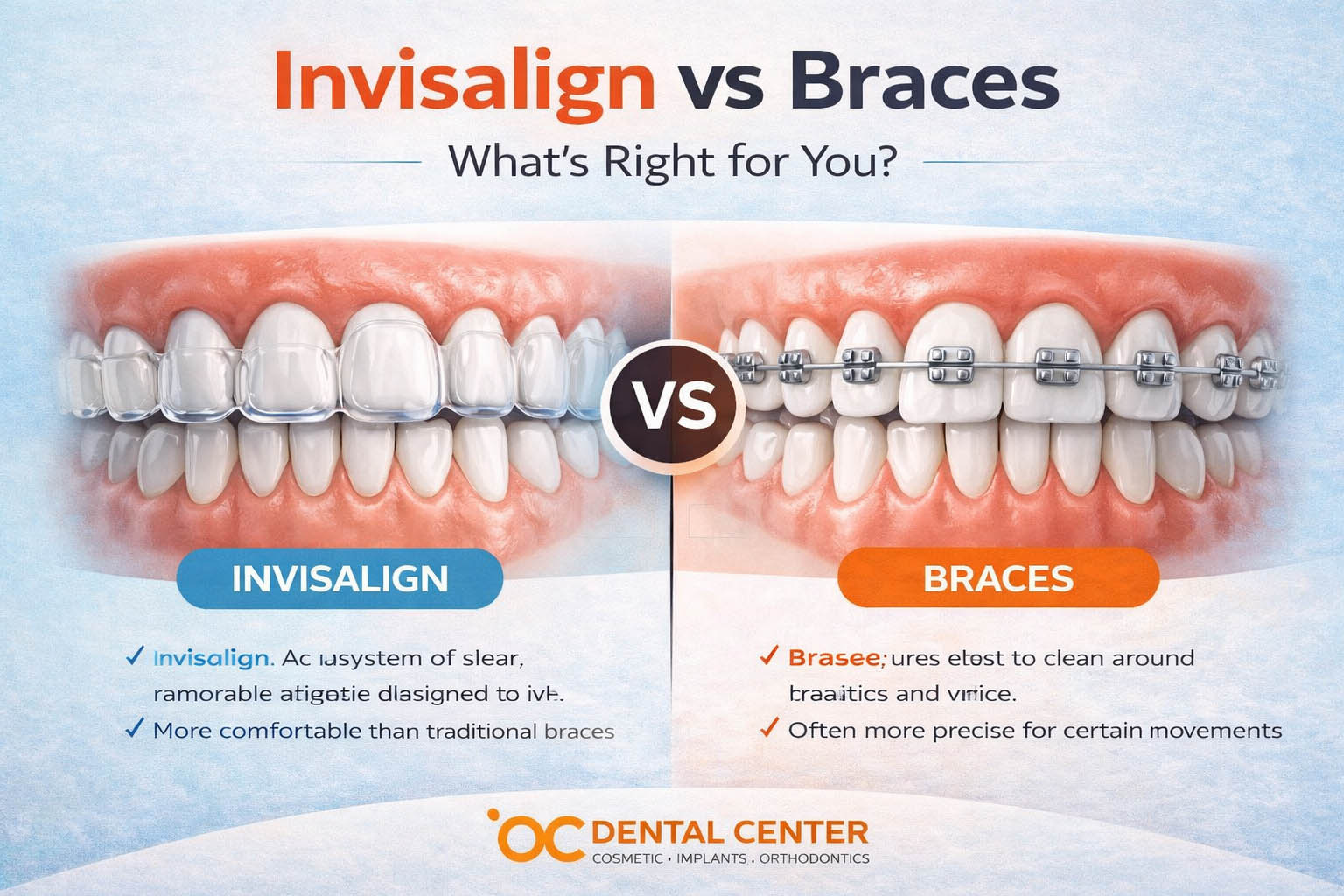
Invisalign vs Traditional Braces: What’s Right for You?
If you’re considering straightening your teeth, you’ve likely come across two main options: Invisalign and traditional braces. Both are highly effective, but they differ in appearance, comfort, treatment time, and lifestyle impact.
At OC Dental Center in Santa Ana, we help patients choose the best orthodontic solution based on their needs, goals, and preferences. This guide will walk you through the key differences so you can make an informed decision.
What Is Invisalign?
Invisalign is a system of clear, removable aligners designed to gradually shift your teeth into proper alignment. These aligners are custom-made and replaced every 1–2 weeks as your teeth move.
Key Benefits of Invisalign
- Nearly invisible appearance
- Removable for eating and cleaning
- More comfortable than traditional braces
- Fewer in-office visits
Invisalign is especially popular among adults and teens who want a discreet orthodontic option.
What Are Traditional Braces?
Traditional braces use metal or ceramic brackets attached to the teeth, connected by wires that are adjusted over time to move teeth into alignment.
Key Benefits of Braces
- Effective for complex dental issues
- Continuous treatment (no need to remember to wear them)
- Often more precise for certain movements
Braces have been used for decades and remain a reliable option for patients of all ages.
Appearance: Which Is More Discreet?
One of the biggest differences between Invisalign and braces is visibility.
- Invisalign: Clear aligners are barely noticeable
- Braces: More visible, though ceramic options are less noticeable
If aesthetics are a top priority, Invisalign is often the preferred choice.
Comfort and Convenience
Invisalign
- Smooth plastic aligners reduce irritation
- No wires or brackets
- Can be removed when eating or brushing
Braces
- May cause irritation initially
- Adjustments can create temporary discomfort
- Fixed in place (cannot be removed)
Overall, Invisalign tends to be more comfortable, but it requires discipline to wear aligners for 20–22 hours per day.
Effectiveness: Which Works Better?
Both Invisalign and braces are effective, but the best option depends on the complexity of your case.
- Invisalign: Ideal for mild to moderate alignment issues
- Braces: Better suited for complex cases, including severe misalignment
Your dentist or orthodontist will recommend the most appropriate treatment based on your needs [1].
Ready for a confident, healthy smile?
Located in Santa Ana California
Treatment Time
The duration of treatment varies depending on the severity of your case.
- Invisalign: Typically 6–18 months
- Braces: Usually 12–24 months
Some cases may take longer, and following your dentist’s instructions plays a key role in treatment success.
Maintenance and Oral Hygiene
Invisalign
- Easy to brush and floss normally
- Aligners must be cleaned regularly
Braces
- Requires more effort to clean around brackets and wires
- Special tools like floss threaders may be needed
Maintaining good oral hygiene is essential regardless of the treatment you choose.
Diet Restrictions
Your diet may be affected depending on the treatment option.
- Invisalign: No restrictions (remove aligners when eating)
- Braces: Avoid hard, sticky, or chewy foods
This is an important consideration for patients who prefer flexibility in their diet.
Cost Considerations
The cost of Invisalign and braces can vary depending on the complexity of your case and treatment duration.
In many cases, the cost is comparable, and dental insurance may cover part of the treatment [2]. Flexible payment plans are often available.
Which Option Is Right for You?
The best choice depends on your individual needs, lifestyle, and preferences.
- Choose Invisalign if you want a discreet, flexible option
- Choose braces if you have complex alignment issues or prefer a fixed solution
A professional consultation is the best way to determine the right treatment for you.
When to See a Dentist in Santa Ana
If you’re considering orthodontic treatment, scheduling a consultation is the first step. At OC Dental Center, we evaluate your smile and provide personalized recommendations based on your goals.
Whether you’re interested in Invisalign or traditional braces, our team is here to guide you through every step of the process.
Final Thoughts
Both Invisalign and traditional braces are effective ways to achieve a healthier, more confident smile. Understanding the differences can help you choose the option that best fits your lifestyle and dental needs.
If you’re ready to explore your options in Santa Ana, our team is here to help you take the next step toward a straighter smile.
References
- American Association of Orthodontists. “Types of Orthodontic Treatment.”
- American Dental Association. “Braces and Orthodontics Overview.”
- Cleveland Clinic. “Invisalign vs Braces.”
- NHS. “Orthodontic Treatment Options.”
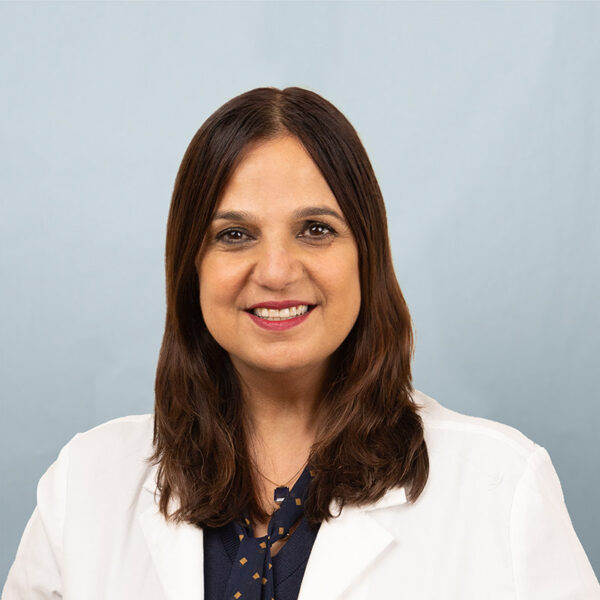
AUTHOR BIO: Dr. Pooneh Sabo D.D.S
Dr. Pooneh Sabo is a comprehensive cosmetic and functional dentist and founder of OC Dental Center in Orange County, California. With over two decades of clinical experience, she specializes in oral care ingredient safety, cosmetic dentistry, whitening technologies, and minimally invasive treatment focused on preserving natural tooth structure and long-term oral health.